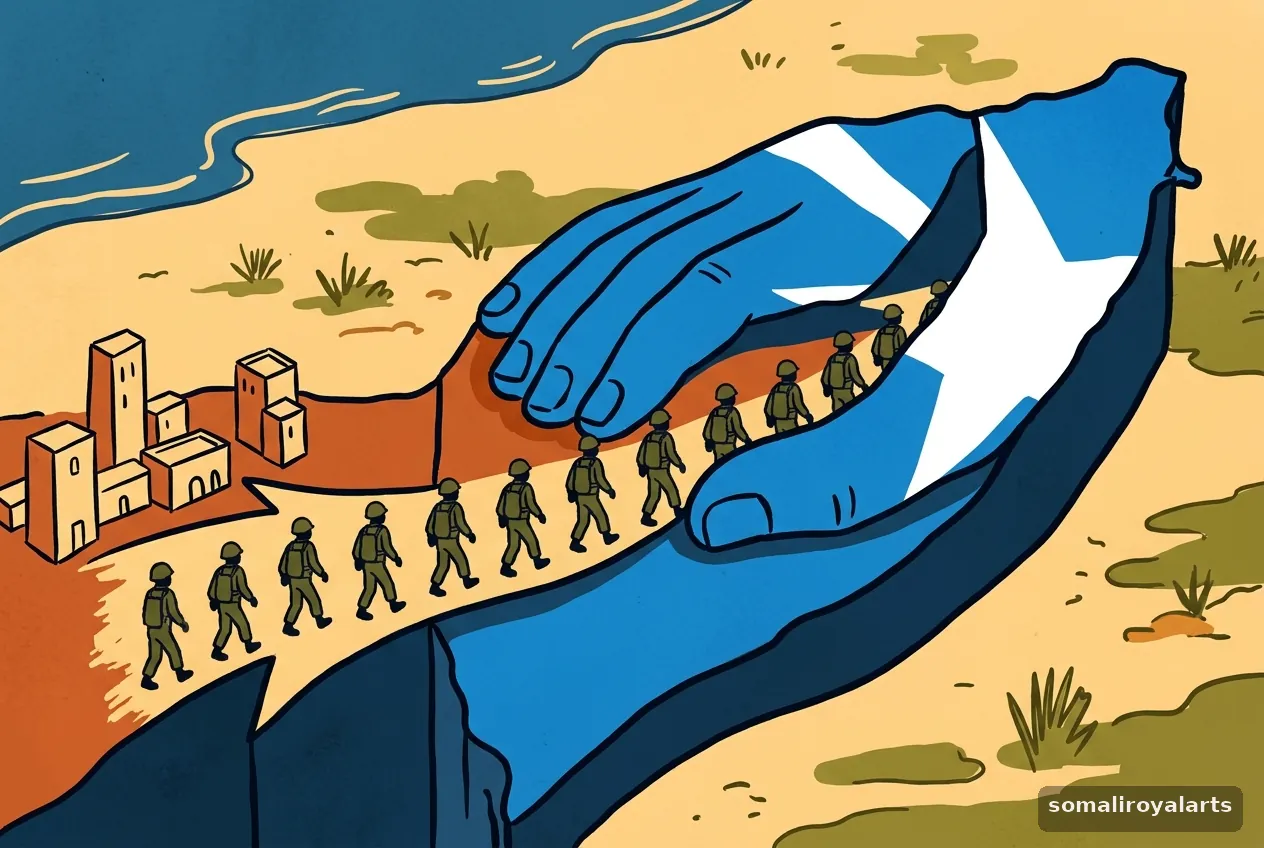
Puntland Absorbs Federally Registered Forces After Clashes
The Puntland Defence Forces gave armed groups operating outside the state’s chain of command two days to surrender and join the regional forces. President Said Abdullahi Deni warned that anyone remaining outside that structure after the deadline would face prosecution. The administration also warned civilians that sheltering or supplying armed personnel would carry legal consequences. Most of the operation involved negotiation and registration rather than fighting. Elders from Bari, Nugal and Mudug carried the terms into the camps, and Puntland recovered most of the men who had left its forces. Returnees are being restored to the state’s rolls, with Puntland assuming responsibility for their salaries and entitlements while they relinquish the federal registration that had made them a separate force. Galkayo was the exception. Puntland forces attacked a base on the city’s northern outskirts before dawn, taking 101 men into custody along with 60 wounded. They also recovered vehicles, ammunition, communications equipment and police gear, including uniforms, boots and handcuffs. Some of the equipment had formed part of a Chinese donation to the Somali Police Force. Regional reporting said about 70 fighters surrendered during the clash. Mortar rounds striking residential districts killed one civilian and wounded two, while families moved to safer parts of the city. No shooting was required in Bosaso. Clan-mediated negotiations persuaded the former Puntland Security Force militia to surrender its weapons and headquarters to the government. The compound was significant because the port generates most of Puntland’s revenue. On Saturday, Puntland took in the Carmo command and another camp in Galkayo, closing the military phase of the operation. Units commanded by General Jimcaale at Ligle in Nugal also agreed to return under the same terms. They had called themselves Danab despite not belonging to that force, while Jimcaale agreed to renounce his appointment to the 54th Division, a formation that existed only on paper. The Barda-dheere garrison, which crossed from north of Galkayo to federal positions on the Galmudug side, is also negotiating its return. Puntland’s cabinet ordered prosecutions of politicians and officers accused of undermining state security. Fighters consequently faced a choice between re-registration with back pay and appearing in court. Puntland also told neighbouring administrations that armed men crossing into their territory would become their responsibility. Absorbing the units brings a financial burden. Several hundred men are returning to Puntland’s payroll while the administration is largely financing its campaign against the Islamic State faction in the Calmiskaad mountains from its own revenue, without the logistics package provided by the African Union mission farther south. Many of the returnees are remnants of the Puntland Security Force, an experienced counterterrorism formation raised and trained with American funding. Weapons, vehicles and trained personnel assigned to the Puntland dispute were unavailable on fronts where al-Shabaab holds territory in Hiran and national forces in the central regions face ammunition shortages. With Puntland now controlling the compounds, equipment and returning recruits, the political conflict between Mogadishu and the member states is becoming inseparable from Somalia’s wider security struggle.
Read our sourcing and corrections policy

Be the first to comment on this story!