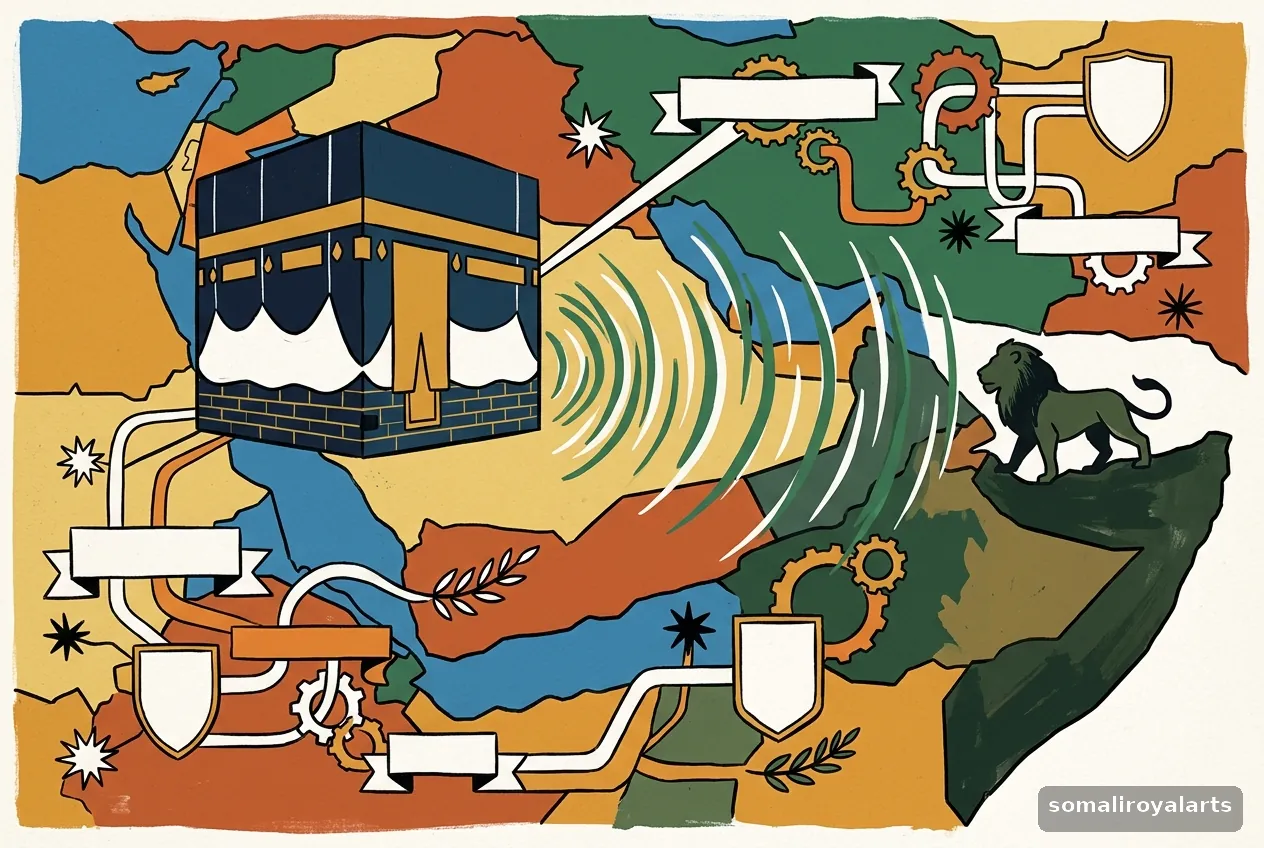
Makkah Pact Signals Regional Security Shift
Saudi Arabia, Turkey and Pakistan have signed a defence pact in Makkah that signals an effort to build an additional layer of security as confidence in the Middle East’s established order weakens. The agreement is not yet an “Islamic NATO”, but it combines Saudi financial and political weight, Turkey’s military and expanding defence industry, and Pakistan’s military experience and status as the Muslim world’s only nuclear-armed state. Saudi Arabia has relied for decades on American weapons, intelligence and military infrastructure. Yet Iranian missiles, drones and Tehran-backed groups have repeatedly demonstrated the kingdom’s vulnerability. Iranian attacks have struck Gulf infrastructure, while the current conflict has disrupted shipping through the Strait of Hormuz and threatened Saudi Arabia’s oil-dependent economy. The pact appears to be strategic insurance rather than a break with Washington. Saudi Arabia remains heavily dependent on the United States, Turkey is still a NATO member, and Pakistan retains important US military ties. Burcu Ozcelik of the Royal United Services Institute has argued that stronger regional cooperation could also support Washington’s longstanding aim of having allies carry more of the defence burden. Turkey adds a large standing military, naval power and a defence industry that exports drones, missiles and warships. Saudi Arabia wants to reduce its reliance on imported weapons, while Turkey is seeking new markets, investment and a larger regional security role. These interests create scope for joint production and procurement, intelligence sharing and more integrated military planning. Pakistan’s participation has raised questions about nuclear deterrence, but there is no evidence that Islamabad has extended a nuclear guarantee to Saudi Arabia or Turkey. Officials say the agreement is defensive and aimed at no particular country. Even so, a state contemplating a major attack on Saudi Arabia must now consider how Pakistan might interpret a clause treating an attack on one partner as an attack on all three. Pakistan has also deployed thousands of troops, fighter aircraft, drones and air-defence systems to Saudi Arabia during the current conflict. Iran is the most immediate concern, although Riyadh wants stronger deterrence without entering an open-ended war that could damage oil exports, investment and Crown Prince Mohammed bin Salman’s economic transformation plans. The agreement also gives Saudi Arabia a security option that can advance independently of normalisation with Israel, although it does not constitute an anti-Israel alliance. The Makkah pact currently lacks NATO-style integrated command, permanent institutions and established collective-defence procedures. It remains unclear what kind of attack would trigger a response or what forces each country would provide. Joint exercises, maritime patrols, intelligence sharing and integrated air defence could turn it into a functioning security framework; without them, it may remain largely declaratory. For Somalia, the emerging pattern is relevant because a larger Turkish security role and closer defence coordination among major Muslim states could shape future approaches to stability in the Horn of Africa and its surrounding sea lanes.
Read our sourcing and corrections policy

Be the first to comment on this story!