UAE Expands Commercial and Military Footprint in Berbera
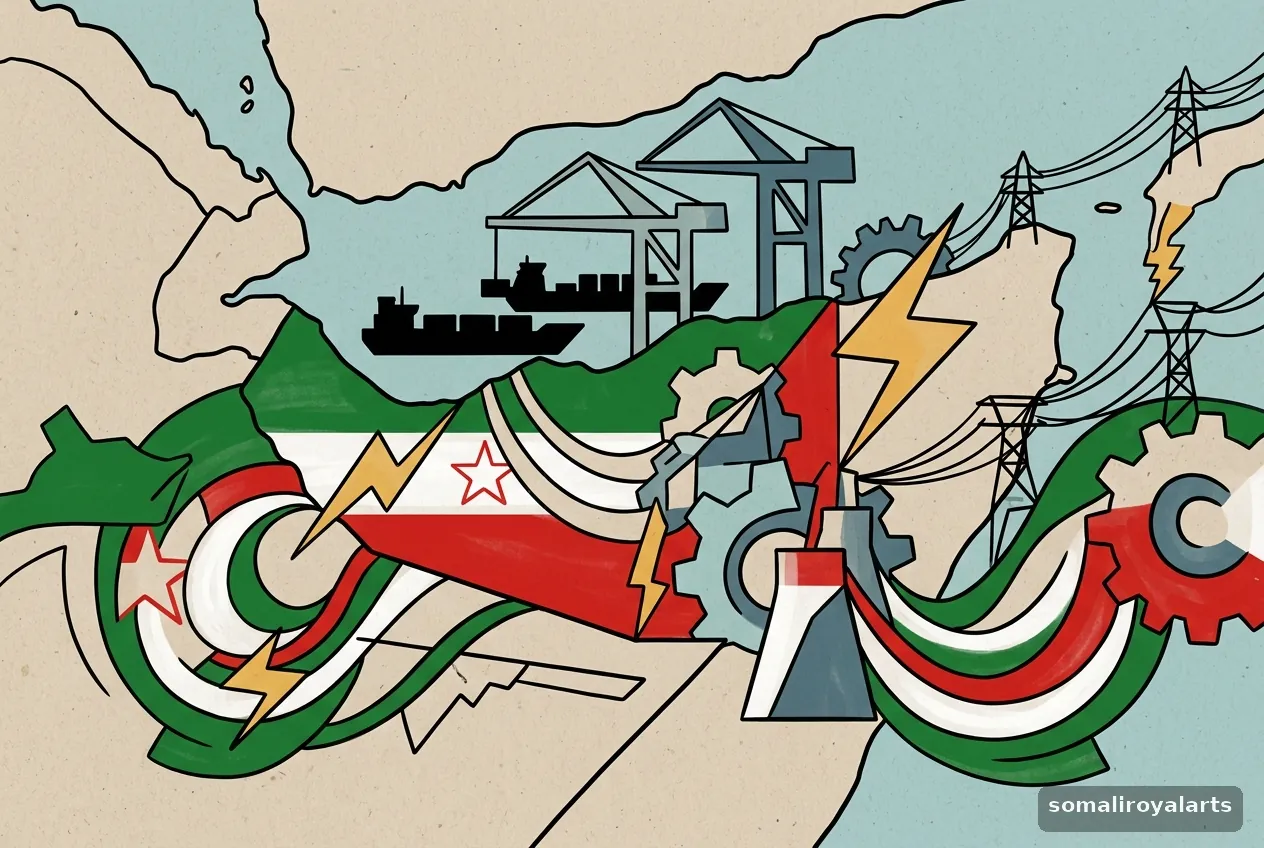
The giant cranes on Berbera’s waterfront are the most visible sign of the United Arab Emirates’ presence in Somaliland. Alongside hundreds of millions of dollars invested in the port, the UAE has access to a naval and military facility and a Soviet-era airfield with a runway stretching more than four kilometres. A Financial Times investigation described Berbera as one of Africa’s clearest examples of the overlap between the UAE’s commercial ambitions and its projection of strategic power. The strategy operates on two tracks. Dubai, through the state-owned logistics company DP World, established a commercial foothold by modernising the port and positioning it as a potential gateway to landlocked Ethiopia. Abu Dhabi, the UAE’s political and security centre, secured access to military infrastructure overlooking one of the world’s most important maritime corridors. DP World obtained a 30-year concession to manage and develop Berbera, committing about $450 million to the project. The development brought new ship-to-shore cranes, upgraded storage facilities and other modern port infrastructure. DP World says the investment significantly expanded Berbera’s container capacity. In 2023, the World Bank and S&P Global ranked it the most efficient container port in sub-Saharan Africa, while DP World has said it could double capacity again if the commercial opportunity develops. Ethiopia is the main commercial prize behind the investment. The landlocked country has a population of more than 120 million and conducts most of its maritime trade through Djibouti. The UAE also helped develop a roughly 250-kilometre road leading from Berbera towards Ethiopia. A fully functioning Berbera corridor could offer Ethiopia an alternative trade route and redirect some traffic towards the Somali coast. A new shipping service between the UAE and Berbera has further strengthened the commercial connection. The port project, however, extends beyond trade. According to the Financial Times, DP World’s commercial agreement was negotiated alongside a separate and opaque arrangement that gave the UAE control of a nearby naval and military facility and access to Berbera’s Soviet-built airstrip. The runway, constructed during the Cold War, is about 4.2 kilometres long. The newspaper said recent satellite imagery showed additional bunkers and other military facilities being built near the runway. That followed a July report by Somalia Today, citing a Le Monde investigation based partly on satellite imagery, about renewed Emirati military construction at the site. Berbera faces the Gulf of Aden and lies close to the Bab al-Mandab, the narrow passage connecting the Indian Ocean and the Red Sea and carrying shipping towards the Suez Canal. The route has become increasingly exposed to regional conflict, piracy and attacks linked to the war in Yemen. According to the Financial Times, Emirati security interests include monitoring shipping routes and countering threats from Somali pirates, Yemen’s Houthi movement and militant Islamist organisations. The combination of a commercial port and nearby military access reflects a broader UAE strategy in Africa. DP World and Abu Dhabi Ports operate or are developing ports, terminals and free zones in 13 African countries, while DP World’s distribution network reaches more than 25 states. Emirati officials reject claims that this expanding footprint is intended to dominate the continent. They argue that the UAE invests where other countries are often unwilling to take risks and that its engagement promotes trade, development and prosperity. Somaliland declared independence from Somalia in 1991, but Somalia’s federal government continues to regard it as an integral part of its sovereign territory. Mogadishu says foreign agreements involving ports, military facilities and other strategic assets in Somaliland raise fundamental questions of sovereignty and territorial integrity. The Financial Times reported that the UAE sympathises with Somaliland’s recognition ambitions and that Israel supports them. Somalia Today has previously reported that the UAE lobbied several countries to recognise Somaliland. Berbera brings together competition over regional trade routes and security interests in the Gulf of Aden. If the Ethiopian corridor develops, the port could provide an alternative commercial route, while the parallel military access will continue to sharpen Somalia’s concerns over agreements involving strategic assets in Somaliland.
Read our sourcing and corrections policy



Be the first to comment on this story!