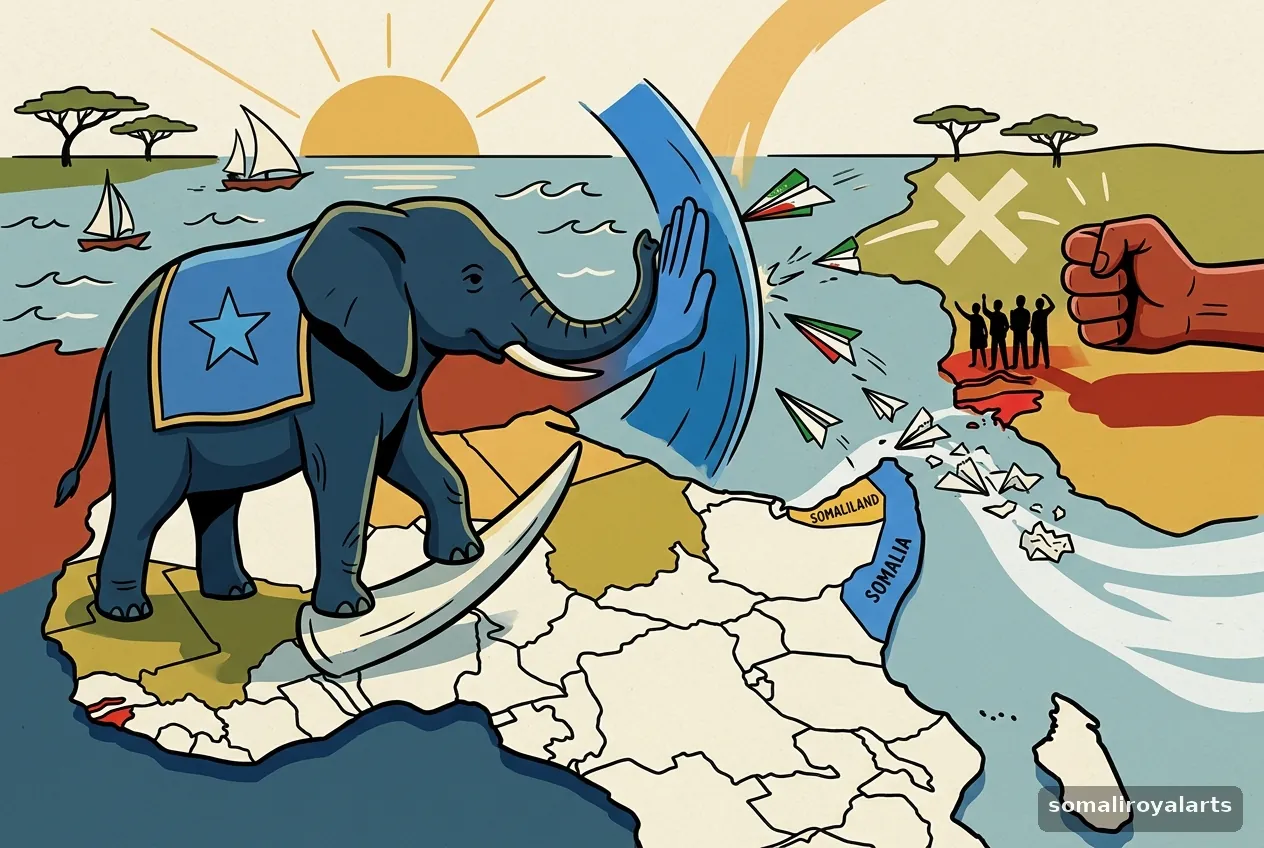
Somalia and Allies Thwart Somaliland Bid in Guinea-Bissau
Somaliland’s attempt to secure recognition from Guinea-Bissau collapsed after Somalia and friendly countries intervened, Mada Masr reported, citing senior officials familiar with the talks. Three senior Somaliland representatives, including the foreign minister, travelled by private jet to Guinea-Bissau for meetings with senior government officials. A senior Somaliland official told Mada Masr that the talks had been successful and that the delegation left believing formal recognition was close. Somaliland President Abdirahman Mohamed Abdullahi, known as Irro, was awaiting an official declaration and a confirmation call from Bissau. Guinea-Bissau’s foreign ministry said on July 26 that the country had “neither taken nor is considering any decision” to recognise Somaliland. A senior Somali official told Mada Masr that Mogadishu contacted Guinea-Bissau’s foreign minister after learning of the delegation’s presence. According to that official, the Guinea-Bissau side denied that Somaliland representatives were in the country and said Bissau had no intention of recognising the territory. A Somaliland official said Somalia’s intervention received support from Türkiye, Egypt and Saudi Arabia, while the Somali official said Mogadishu coordinated its response with friendly countries. Two Egyptian officials also told Mada Masr that Cairo and Riyadh had contacted African governments to discourage them from following Israel’s example. The Guinea-Bissau visit was part of a wider recognition campaign that also included approaches to Eswatini, South Sudan and other governments. In a July 29 interview with Universal TV, Somalia’s State Minister for Foreign Affairs, Ali Mohamed Omar, said Mogadishu had persuaded six unnamed countries not to follow Israel. Omar said Somalia had sent letters to governments approached by Somaliland and expressed confidence that no African country or major international power would recognise Hargeisa. The campaign intensified after Israel became the first UN member state to recognise Somaliland formally on December 26, 2025. Israeli Prime Minister Benjamin Netanyahu said the decision was made in the spirit of the Abraham Accords, while Somalia rejected it as an attack on its sovereignty. A Somali official accused the United Arab Emirates and Israel of backing and spearheading the recognition campaign, although neither country has publicly confirmed such a role. President Hassan Sheikh Mohamud dismissed suggestions in June that Israel’s decision would trigger further recognitions. The African Union remains firmly opposed to moves that could undermine Somalia’s territorial integrity. Following Israel’s recognition, AU Commission Chairperson Mahmoud Ali Youssouf said Somaliland remained an integral part of the Federal Republic of Somalia and warned that recognition could create a dangerous precedent across Africa. Somaliland declared independence from Somalia in 1991 and has established its own administration, security forces and currency, but continues to seek international recognition. In January 2024, then-President Muse Bihi Abdi signed a memorandum envisaging Ethiopian access to a 20-kilometre stretch of coastline, while Somaliland officials said Ethiopian recognition was expected. Later agreements reaffirmed Somalia’s and Ethiopia’s sovereignty, unity and territorial integrity and provided for pursuing Ethiopian sea access under Somali sovereignty. Bihi’s 2019 visit to Guinea prompted Somalia to sever diplomatic relations with Conakry but produced no recognition. Irro said in June that only Denmark and Israel had responded after Somaliland approached 193 countries. Mogadishu’s rapid response and support from friendly governments illustrate the diplomatic obstacles still facing Hargeisa’s effort to secure recognition from a second country.
Read our sourcing and corrections policy
Be the first to comment on this story!