Theban Tomb Excavation Reveals Shift in Ancient Egyptian Burial Practices
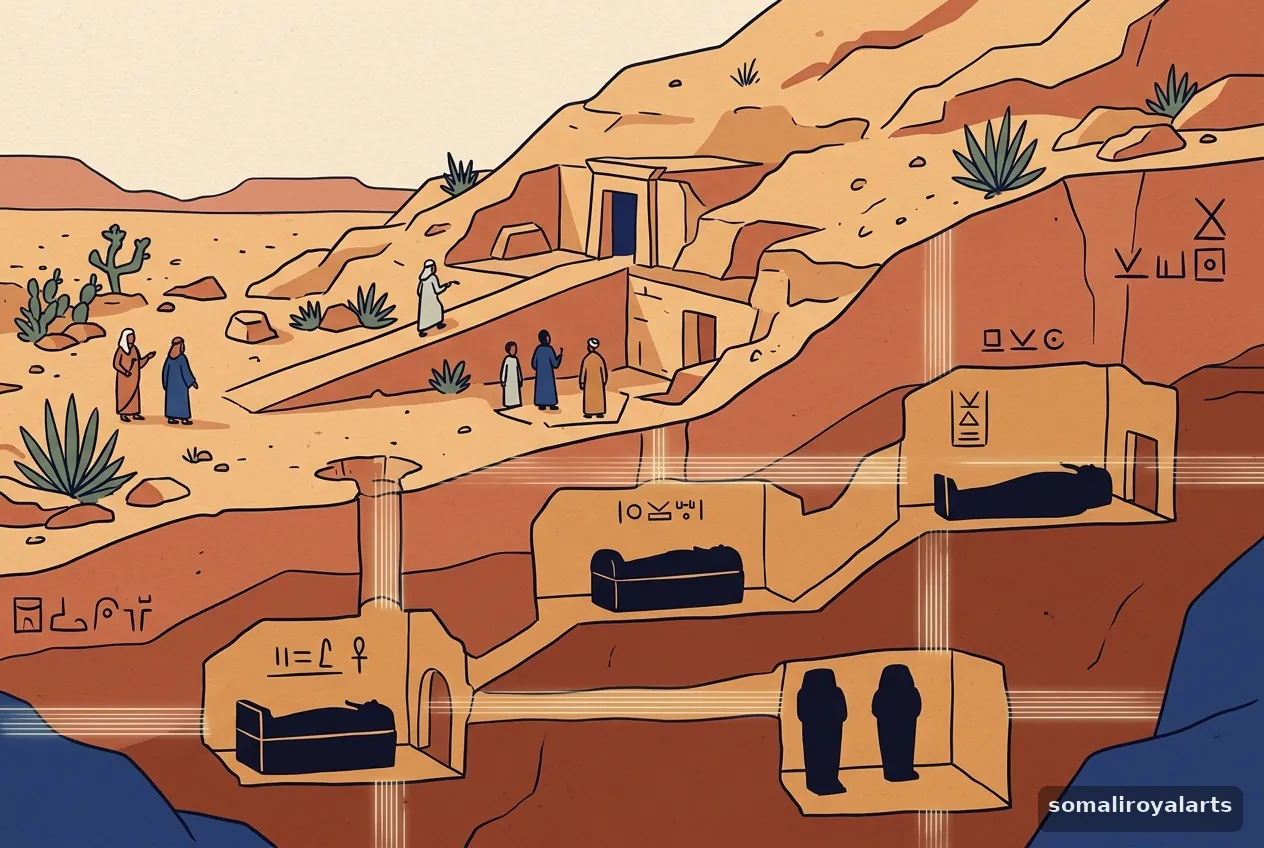
Researchers excavating a Theban tomb in Egypt’s western necropolis have uncovered significant evidence detailing how ancient burial practices evolved over centuries. The site, identified as Tomb 209, provided archaeologists with an undisturbed look at multiple generations of interments spanning hundreds of years. The findings, derived from an integrated approach to studying human remains and artifacts, illustrate a distinct shift from individual burials in ornate coffins to dense, shared spaces focused on the physical integrity of the mummies rather than their containers. The tomb dates back to the early 25th Dynasty, which ran from 754 to 656 BCE, and was eventually abandoned much later during the Ptolemaic period between 305 and 30 BCE. Archaeologists believe the original owner of the tomb was a high-ranking official of Nubian descent named Nisemro. Because the tomb is situated within the active drainage channel of the Wadi Hatasun, it was highly vulnerable to repeated flash flooding over the centuries. This environmental factor created a complex site, both archaeologically and stratigraphically, requiring thorough osteological analysis to reconstruct the chronological sequence of the burials. The recent study focused heavily on an area known as Side Chamber 3, one of the main secondary areas of the tomb that remained largely undisrupted over time. Excavations in this specific chamber yielded the mummified remains of 16 individuals, comprising a total of 1,444 bones, alongside one mummified dog. In another chamber, the research team discovered the fragmented, disarticulated remains of at least four additional individuals, which accounted for another 1,775 bone fragments. Jared Carballo-Perez of the University of La Laguna in Spain, a co-author of the study, noted that the placement of the bodies was highly deliberate. He stated that the detailed study of the bodies indicated neither chaotic accumulation nor a loss of the original ritual over time. Instead, the later burials were positioned with respect to the existing remains, demonstrating what researchers called a "funerary memory" in the reuse of the space. It was a structured spatial logic where each new deposition adapted to the presence of previous bodies. The earliest burials found at the site from the 25th Dynasty featured single interments—specifically identified as mummies 13, 14, 15, 16, and 17—where men and women were often placed separately, though researchers caution against drawing firm conclusions from that specific separation. Miguel Ángel Molinero Polo, another co-author from the University of La Laguna, explained that these early individuals appeared to be of high social standing. They were buried in wooden coffins with funerary nets, amulets, and expensive items, including the contents of imported Phoenician amphorae, incense cups, and beads. The mummies from this early period were typically laid out horizontally with their arms stretched out. In the intermediate and later stages, extending from the late 25th Dynasty through the Persian phase, the burial style changed dramatically as new bodies were placed in areas already occupied by mummies. Coffin use saw a notable decline, and bodies were increasingly stacked in vertical superpositions in shared areas. These later bodies did not have coffins but were still carefully mummified and were often associated with upright jars pointing to specific rituals not seen in the earlier phases. Additionally, the positioning of the bodies shifted, with later mummies having their arms folded inward rather than stretched out. The tomb also bore evidence of environmental and physical disruption in some chambers, consisting of accumulated silts, sands, gravels, limestone blocks, plaster, ceramics, and other displaced materials resulting from human intervention or flooding. Furthermore, one chamber—the one containing the fragmented remains of four people—showed clear signs of severe fire damage. Researchers found that the remains had been damaged by excessive heat reaching as high as 550 degrees Celsius (1,022 degrees Fahrenheit), which particularly affected the crania and lower limbs of the individuals inside. The findings at Tomb 209 align with patterns observed in other Theban tombs from the first millennium BCE, where roughly 80 percent of sites show evidence of shared space across different eras. The authors concluded that the reduced reliance on coffins reflected a broader reconfiguration of the Egyptian funerary system. The chamber acted as a dynamic mortuary environment where bodies, objects, sediments, and architectural constraints shaped funerary continuity, shifting the focus towards the integrity of the body and the symbolic efficacy of the ritual over the container itself. The findings from this ancient tomb are limited to early Egyptian history and have no direct material connection or practical impact on the daily lives of Somali readers.
Read our sourcing and corrections policy


Be the first to comment on this story!