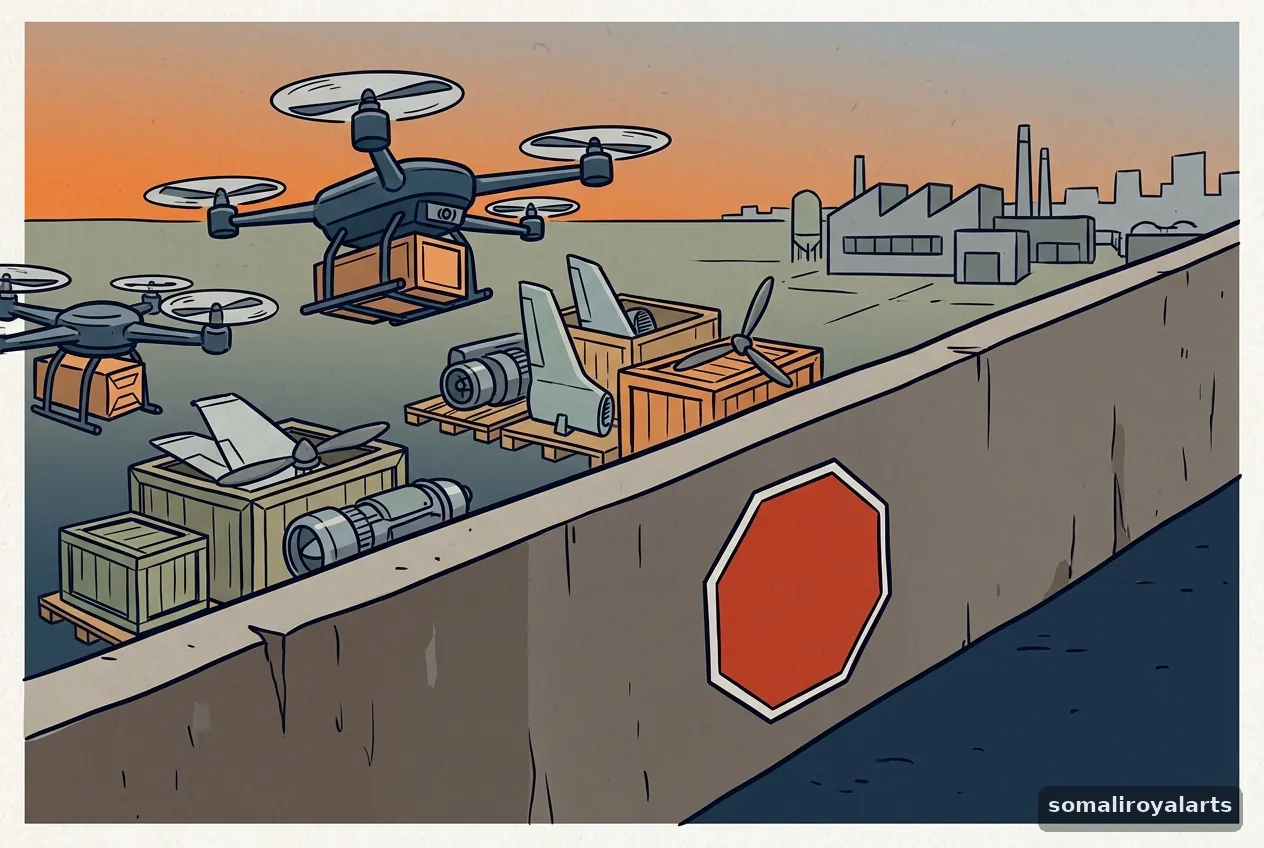
Trump Announces New Tariffs on Drones and Aircraft Parts
President Donald Trump has announced new tariffs on imported drones and certain components for unmanned aircraft. The move follows earlier restrictions on the future entry of foreign drones and other devices into the United States. A 100 percent tariff will apply to drones equipped with thermal cameras, drones weighing more than 25 kilograms (57 pounds), and any component for an unmanned aircraft exceeding that weight. Other drones, including small consumer models weighing less than 250 grams, will face a 25 percent tariff. Companies that commit to producing some drones or aircraft parts in the United States can avoid the tariffs. The European Union, Japan, Liechtenstein, South Korea, Switzerland and Taiwan will receive a 15 percent rate, while the United Kingdom will receive a 10 percent rate, provided substantially all hardware, software and technology originate in those countries and the United States. The proclamation also authorizes the Secretary of Commerce to create a program encouraging investment in US facilities that produce unmanned aerial systems and their components. Previous government incentives for drones have been directed toward military uses. Separately, the FCC has threatened retroactive restrictions on “military-grade” drones under definitions that could also cover equipment used by farmers, first responders and light-show operators. Earlier this year, the Supreme Court and the US Court of International Trade ruled against Trump’s global tariffs, but the president has continued announcing additional tariffs. Companies can first raise prices so buyers absorb the tariff costs and later receive government refunds if the tariffs are declared illegal, without passing those refunds to consumers or reducing prices. Higher prices for drones and replacement components could make these imported devices less affordable for Somali buyers.
Read our sourcing and corrections policy



Be the first to comment on this story!