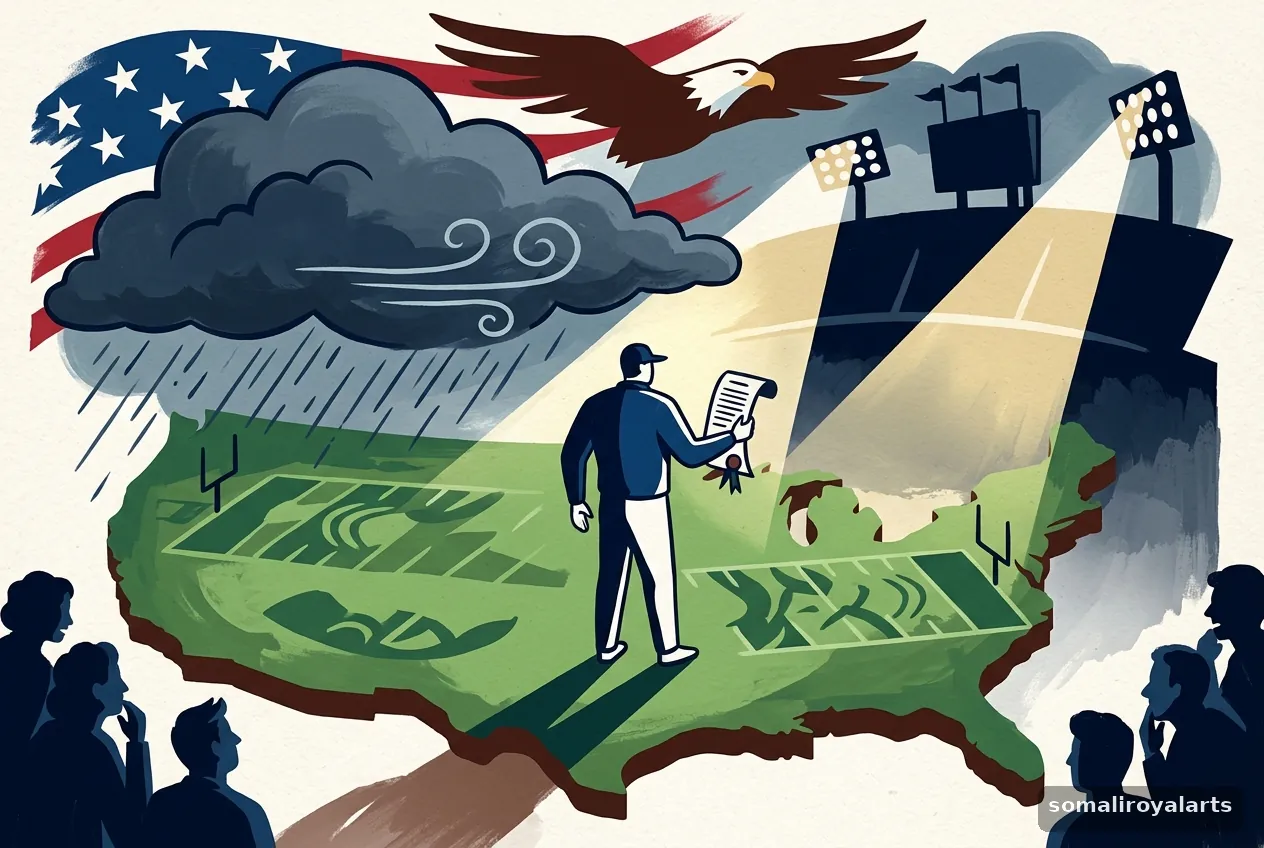
Pochettino Signs Four-Year USMNT Deal to Build on World Cup Run
Mauricio Pochettino has signed a new four-year contract that will keep him as head coach of the U.S. men's national team through the 2030 World Cup. The deal followed weeks of what one source described as a 'steady, collaborative back and forth,' not a simple offer-and-answer negotiation. U.S. Soccer had made its desire to keep Pochettino clear before the 2026 World Cup, but he and his staff chose to wait and see. The tournament brought both highs and lows: a pressing style produced group-stage wins over Paraguay and Australia, while a round-of-16 defeat to Belgium ended in a humbling 4-1 scoreline. Despite the Belgium result, both sides saw enough promise to continue. One source said the publicity was 'perfect' and sponsors were happy, with donors too. Ken Griffin is again the lead philanthropic funder behind Pochettino's appointment, as he was in 2024, and said he was 'thrilled' at the coach's return. Scott Goodwin, Adam Freede and several commercial partners are also contributing. Pochettino's decision to stay came as something of a surprise given his long-stated love for club football, especially the Premier League. He said the feeling of being wanted mattered, recalling that U.S. Soccer believed in his staff before the World Cup. His stints at Paris Saint-Germain and Chelsea had shown him that alignment between a coach and federation is rare; he now has it at U.S. Soccer. He now wants to 'start from zero' with a fresh philosophy, and the four-year cycle gives him time to bring in younger players and address thin spots at center back and goalkeeper. 'We need to provide every player the possibility to be in this process,' he said, stressing that performance would open the door. He acknowledged that coaching is fluid. 'Four years is a really long period. You never know what can happen in soccer,' he said. He insisted he signed because he believes in the journey, not simply to collect a salary. The lure of a top European club job may still test him, and a second cycle has often been difficult for U.S. managers once the message grows stale. Away trips to Costa Rica, Honduras and Panama will remain tough even though qualification should be easier with the World Cup expanded to 48 teams. Pochettino believes the gap with teams like Belgium can be closed with time and player development. 'We learned that we can compete,' he said. 'We have the quality and the talent.' Across North American cities like Minneapolis and Columbus, where Somali diaspora communities are deeply rooted, the USMNT's trajectory under Pochettino has become a shared talking point since the 2026 World Cup. A known, committed coach steering the team toward 2030 gives these fans a stake in American soccer's future that feels personal.
Read our sourcing and corrections policy

Be the first to comment on this story!