Perseverance Nears Mars Driving Record Using Autonomous Navigation
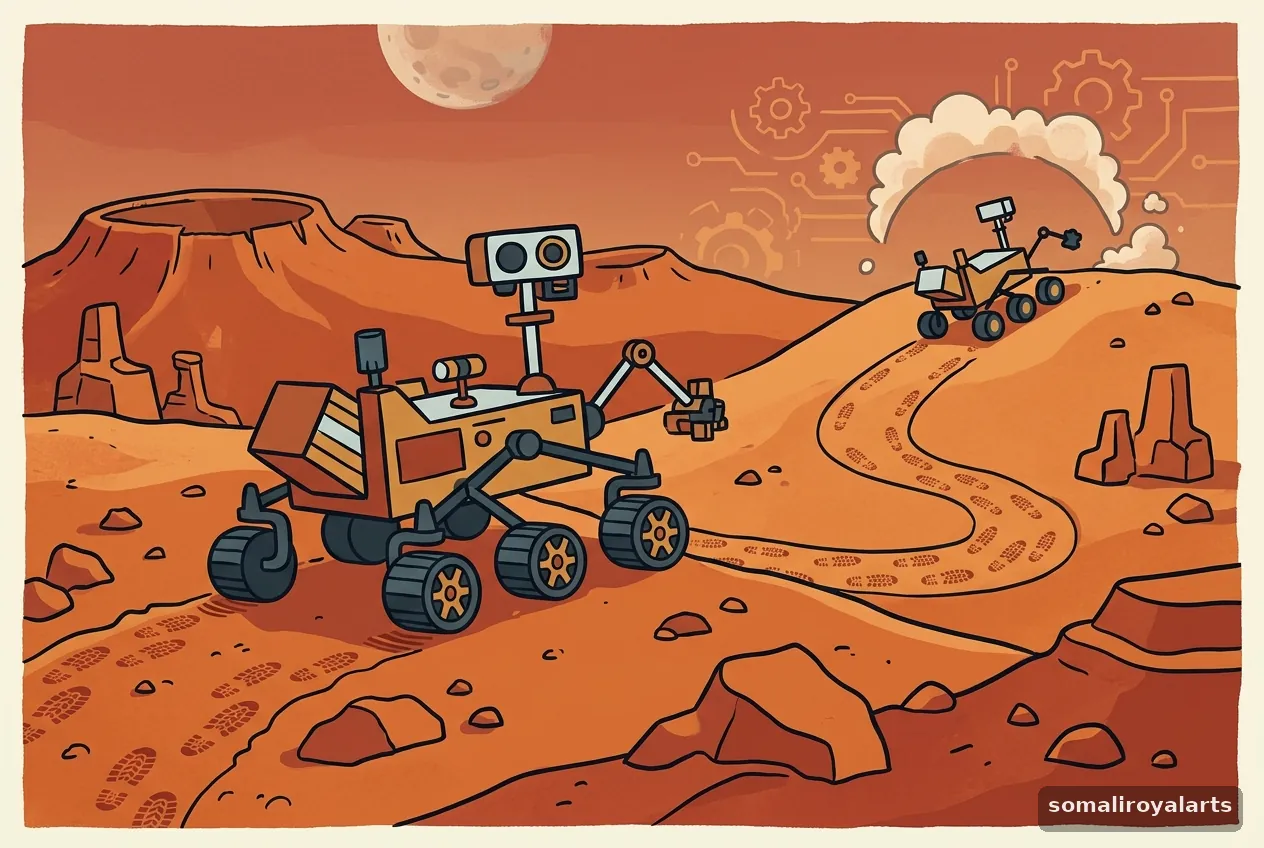
NASA’s Perseverance rover is approaching the Mars distance record, with about 90 percent of its travel completed autonomously. The automobile-sized rover landed in February 2021 and is expected to pass 45.16 kilometres (28.06 miles), the distance covered by Opportunity before it ceased communicating with NASA in 2018. Perseverance is reaching that mark in about one-third of the time Opportunity required. Steven Lee, Perseverance project manager at NASA’s Jet Propulsion Laboratory, said the enabling technology is the rover’s autonomous navigation system. Its onboard cameras photograph the surrounding terrain, and a computer processes the images to calculate the safest route. This allows the rover to navigate hazards including large boulders and sandy slopes without the detailed maps, road signs or marked lanes available to vehicles on Earth. The technological difference is clear when Perseverance is compared with Curiosity, which launched nine years earlier. Curiosity has similar cameras and algorithms, but its computer is a generation older and includes chipset technology dating to the 1990s. Its slower processing means that only about 10 percent of its driving has been autonomous. Curiosity has travelled 38.6 kilometres during nearly 15 years on Mars. Perseverance uses a somewhat newer Vision Compute Element that lets it sense its environment and calculate a route while its wheels are moving. Its maximum wheel speed is only about 150 metres per hour, but it does not have to spend as much time stopped while awaiting navigation commands from operators on Earth. That leaves more time for scientific work. Mission deputy project scientist Vivian Sun said the driving capability has given the mission a broader scope than previous missions. Curiosity landed in Gale Crater and has been moving gradually up Mount Sharp while taking detailed measurements. Perseverance landed in Jezero Crater, where its scientific targets are more widely dispersed. Autonomous navigation has allowed it to move between those locations, sometimes reaching a new site ahead of schedule. In Jezero Crater, Perseverance is examining some of the oldest rocks in the Solar System. They are older than any rocks on Earth and date back as far as about four billion years, near the end of the “heavy bombardment” era when many rocks were still striking the inner planets. Scientists are investigating this terrain in place for the first time. The research seeks to clarify the geological and environmental conditions on early Mars and how conducive the planet might have been to life. Large lakes and possibly oceans are thought to have existed there during that period. Scientists believe Mars may have resembled Earth’s Mojave Desert with water flowing through it, although the planet’s ancient conditions remain debated. Perseverance’s wheels were redesigned after Curiosity experienced significant wheel wear, and they have shown no appreciable wear so far. One minor concern involves the wheel actuators, which were initially tested for 20 kilometres of driving. NASA is working to certify them for at least 100 kilometres and possibly farther. The rover uses RTG power and carries no propellants, consumables or lubricants, so operators say it could continue driving across Mars for years. Perseverance’s autonomy connects two crucial tasks: reaching widely separated sites efficiently and devoting more time to the search for evidence about ancient Martian conditions. For Somali audiences interested in science, it offers a concrete example of how autonomous computing can extend exploration into places people cannot yet reach.
Read our sourcing and corrections policy



Be the first to comment on this story!