Hirshabelle Votes as Presidential Choice Shifts to Mogadishu
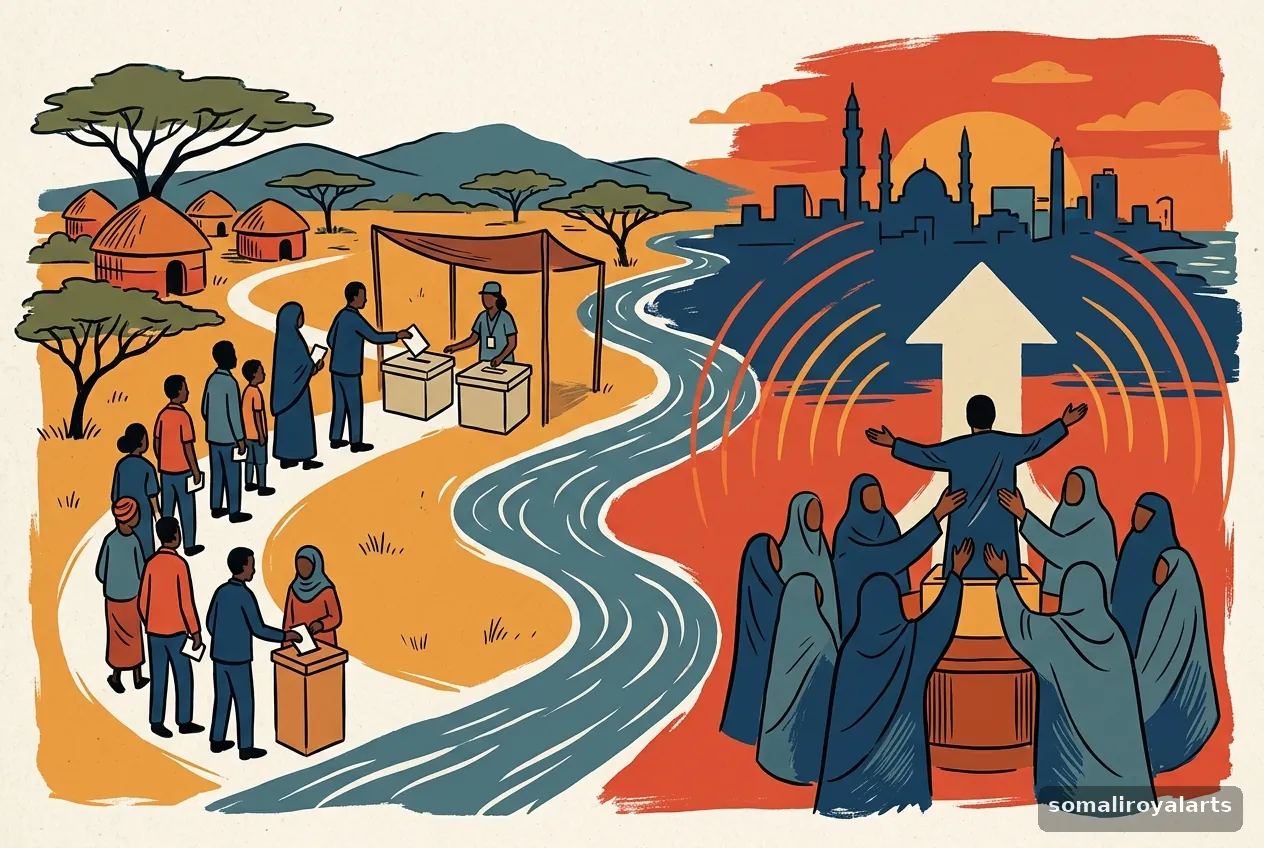
The National Independent Electoral and Boundaries Commission released a timetable on July 26 setting Hirshabelle’s polling day for August 20. Acting under Article 10 of its establishment law and Article 18 of the National Elections Law, the commission opened voter registration and card distribution on August 5. The final register is due on August 16 and candidate lists on August 18, leaving only 48 hours between confirmation and polling. The sequence resembles those used in Galmudug and Southwest, where assemblies were seated within a fortnight of the first voter card being issued. President Ali Gudlawe Hussein launched the registration drive in Jowhar in July 2025 and described it as a turning point for inclusive governance. He said every eligible citizen would have a voice and a vote in choosing local leaders. That promise covers councillors and members of the Hirshabelle assembly, but not the presidency, which the chamber elects. Voters in Jowhar will therefore choose representatives who later choose the state president. Under the power-sharing formula used in Hirshabelle, the presidency alternates between the Hawadle and Abgal clans. Three presidents have held the office since 2016, two of them Hawadle. Gudlawe, an Abgal elected in November 2020, is expected to complete his term, with the next turn falling to the Hawadle. At an August 4 meeting in Villa Somalia, President Hassan Sheikh Mohamud met Hawadle traditional leader Ugaas Yusuf Ugaas Hassan Ugaas Khaliif and senior community politicians. The president asked them to unite behind one candidate, but the elders and politicians deferred the choice to him. Neither side issued a communiqué, the federal government has not publicly addressed the outcome, and no candidate has been named. The assembly elected on August 20 will still conduct the presidential ballot, although the authority to select the Hawadle nominee has been handed to the federal president. Commission chairman Abdikarim Ahmed Hassan briefed ambassadors in Mogadishu on August 10 about elections in Banadir, Southwest and Galmudug and preparations in Hirshabelle. Representatives of the United States, the United Kingdom, China, Turkiye, Ethiopia, Kenya, Sudan and Egypt attended alongside the United Nations, African Union and Organisation of Islamic Cooperation. In Southwest, 132,430 voters filled 95 seats contested by 32 political organisations, with the Justice and Solidarity Party winning 51. Galmudug voted on July 30, and the same party secured 115 local council seats and 63 regional assembly places. It received 106,388 votes, or 55.55 percent of valid ballots cast by 197,971 voters. Towfiiq rejected the outcome and called for an independent review. Security and flooding constrain the Hirshabelle process. Al-Shabaab holds rural areas east and west of Beledweyne, pressures the corridor linking the southern and central regions, and has retaken ground around Mahas that the 2022 uprising had cleared. Hirshabelle’s register is expected to rely on district centres garrisoned by the state and roads its convoys can travel in daylight. Seasonal flooding along the Shabelle presents another risk, with humanitarian agencies warning of displacement during the weeks covered by the timetable. A resident of Beledweyne or Jowhar can vote for local representatives, but the assembly produced by that election will select the president who commands the state’s forces. That distance between the public vote and Hirshabelle’s highest office leaves the final decision shaped by a chamber formed amid insecurity, flood risks and political bargaining.
Read our sourcing and corrections policy
Be the first to comment on this story!