Federal government claims prior knowledge of MV Lutuf airstrikes in Puntland
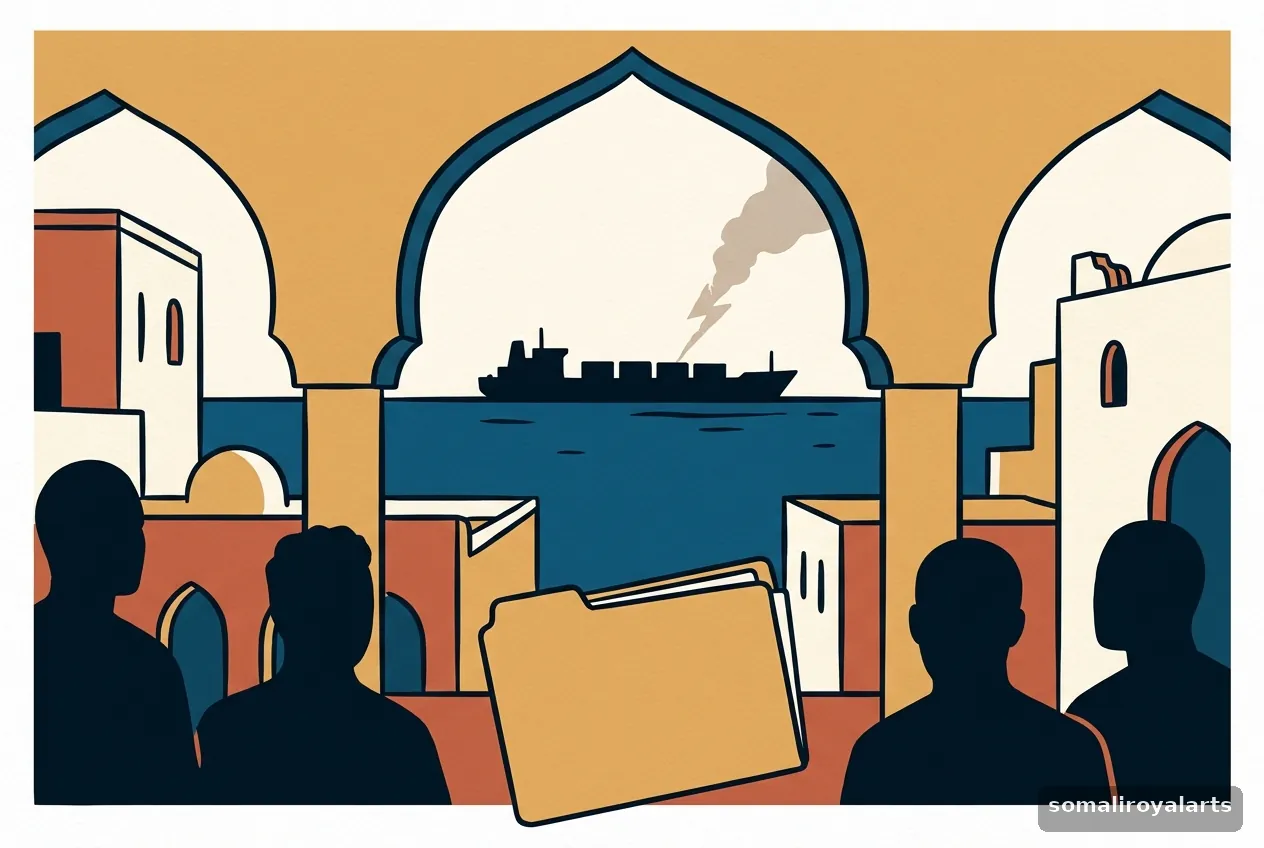
On August 17, eight armed men boarded the Cameroon-flagged MV Lutuf roughly three and a half nautical miles off Marraya in Eyl district, Nugaal. They took a crew of ten: six Indian nationals, one Turkish national, one Georgian and two Serbian security contractors. The cargo included weapons, communications equipment and satellite technology consigned to the Turkish military training facility in Mogadishu. That made the seizure more than an ordinary hijacking on a coast with a long history of piracy, because it affected the supply line of a foreign military presence. Ankara has demanded the vessel’s release. Two Turkish-owned vessels moved close to the MV Lutuf after the seizure, while Turkish helicopters and unmanned aircraft operated along that stretch of coast. The incident has placed a NATO member’s government in direct correspondence over a ship anchored near a Somali fishing village. Strikes then hit small boats travelling between the shore and the vessel’s anchorage. Four men were killed near Garmaal on August 18 and two others were wounded. Initial accounts described the dead men as pirates, but relatives and local residents identified all four by name as civilian fishermen who had no part in the ship’s seizure. Puntland’s security ministry also included a further attack on August 20 in its call for an account from the navies operating off its coast. On Sunday, August 23, a missile struck a skiff carrying what local accounts placed at around ten men after the MV Lutuf had been moved toward the Jiifle shoreline in Godobjiran district. A Jiifle resident who reached the site said eight bodies were burned too badly for their faces to be recognised. The resident said some of the young men on board were locally known as fishermen, but could not say where the boat had come from. Federal official Omar Ali Abdi ended five days of silence from Mogadishu on Saturday, August 22. He told journalists that the federal government had prior knowledge of the operation around the MV Lutuf and questioned whether Puntland could substantiate its claim that the men killed at Garmaal were civilians. He said the federal government was the authority legally competent to determine military operations against piracy along Somalia’s coast, and promised a comprehensive report once his ministry completed its assessment. He named no vessel, air force or flag responsible for the strikes. Ankara later told a Somali-language broadcaster that it had no information indicating Turkish warplanes had conducted airstrikes in those waters. The statement concerns the ministry’s state of knowledge and does not directly answer whether other Turkish military assets carried out the attacks. Mogadishu has not said when it was informed, who informed it, or whether it agreed to the operation. Puntland’s security ministry condemned the renewed piracy, identified the Garmaal victims as civilians, and asked the governments behind international warships near the MV Lutuf to explain who conducted the strikes and on what legal basis. It warned that operations harming fishermen and their property could damage cooperation between Puntland agencies and international counter-piracy partners. Puntland’s deputy information minister said men suspected of crimes were entitled to legal process. The fisheries ministry in Garowe warned shipowners, operators and insurers against paying ransoms, while President Said Abdullahi Deni described the resurgence as a campaign against Puntland’s reputation. The strikes are taking place as international support structures around Somali security are being dismantled. The United Nations has begun issuing termination letters and auctioning mission property, while support for the African Union force is disappearing. Thirteen vessels have been attacked in Somali waters this year, compared with five in all of 2025, and more than 90 seafarers are being held aboard captured ships. In the same week, an Indian naval deployment recovered 22 Indian nationals from two captured vessels. Unidentified aircraft striking small wooden boats have made fishing in Nugaal a more dangerous daily task. For Soomaalida in Eyl, Garmaal and Godobjiran, a clear public account of who is acting in these waters and under what rules matters directly to families whose income depends on the coast.
Read our sourcing and corrections policy
This article was prepared by our automated editorial system, which summarized and translated the source above. No human editor reviewed this article individually before publication.

Be the first to comment on this story!