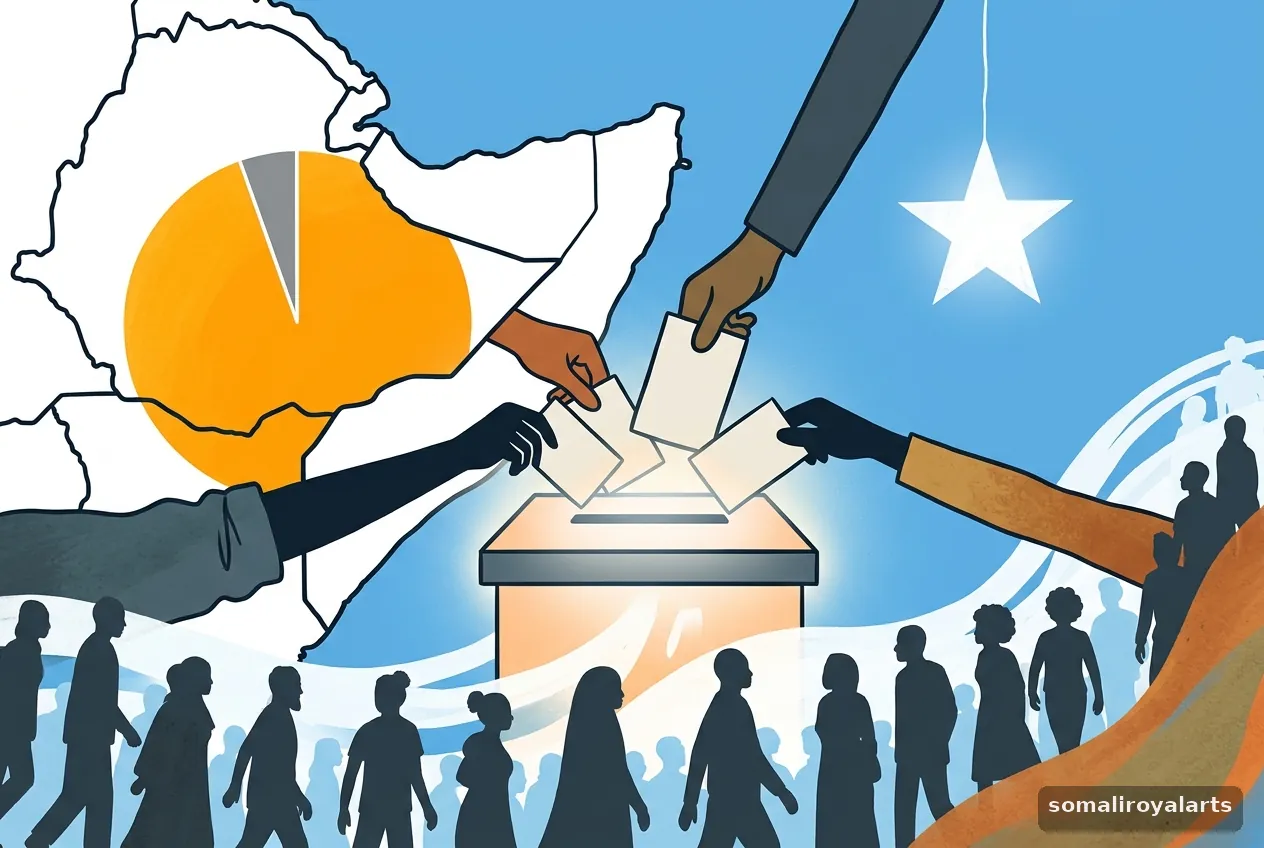
Poll finds 88% support direct presidential vote
Eighty-eight per cent of respondents in a new survey said Somalia’s next president should be chosen through a one-person, one-vote system, signalling strong support for giving citizens a greater role in selecting the country’s leadership. The study by Somali Public Agenda and the Somali Dialogue Platform examined attitudes towards elections, political legitimacy, governance and Somalia’s constitutional transition. The finding supports moving away from the indirect electoral model that has shaped national politics for years. Under that system, clan delegates help choose lawmakers, who then elect the president. Somalia has taken steps towards universal suffrage. In December 2025, Mogadishu residents voted in district council elections, which authorities described as an important step towards restoring direct voting after decades of indirect elections. Electoral commission member Abdishakur Abib Hayir said at the time that it showed Somalia was “standing on its feet and moving forward.” Support for direct elections was not unconditional. Eighty-two per cent said peace and stability should take priority over greater citizen participation during a presidential transition, while 18% favoured participation. Sixty-five per cent said they would prefer a one-person, one-vote election even if preparations required a delay, compared with 35% who prioritised respecting term limits without direct elections. When asked whether Somalia should keep its political transition on schedule or first ensure it remained peaceful and secure, 52% prioritised peace and security while 48% favoured proceeding without extending political terms. The survey comes amid a dispute over constitutional changes, election rules and the mandates of federal institutions. Parliament approved constitutional amendments in March that changed federal terms from four to five years, potentially allowing President Hassan Sheikh Mohamud to remain in office for another year and delaying elections. Opposition leaders reject that interpretation, saying his four-year mandate expired in May. Government forces and opposition-linked fighters clashed in Mogadishu in June ahead of planned protests against the president remaining in office. Former president Sharif Sheikh Ahmed accused the government of “illegally altering the constitution.” Another round of government-opposition talks ended without agreement in July, with disputes over the electoral model, election administration and how elections should be organised in Federal Member States. The opposition Somali Future Council has also backed a form of direct election, proposing that citizens choose lawmakers while retaining the 4.5 clan allocation of parliamentary seats. The survey found that 92% said citizens should choose the most suitable person for a government position regardless of clan, while 8% preferred equal representation among the major clans. Respondents saw civil society organisations as important to building confidence around elections. Nearly two-thirds said security and counterterrorism operations were the issues on which political leaders most needed to communicate openly, ahead of elections, political processes and public finances. Researchers said elections alone would not settle questions of political legitimacy if the constitutional process remained disputed or excluded important political actors. For the urban respondents surveyed, direct voting and a peaceful transition are not competing goals. Their answers place the burden on political actors to make both possible.
Read our sourcing and corrections policy

Be the first to comment on this story!