Ethiopian Troops Transfer Buurhakaba Base Amid Funding Shortfall
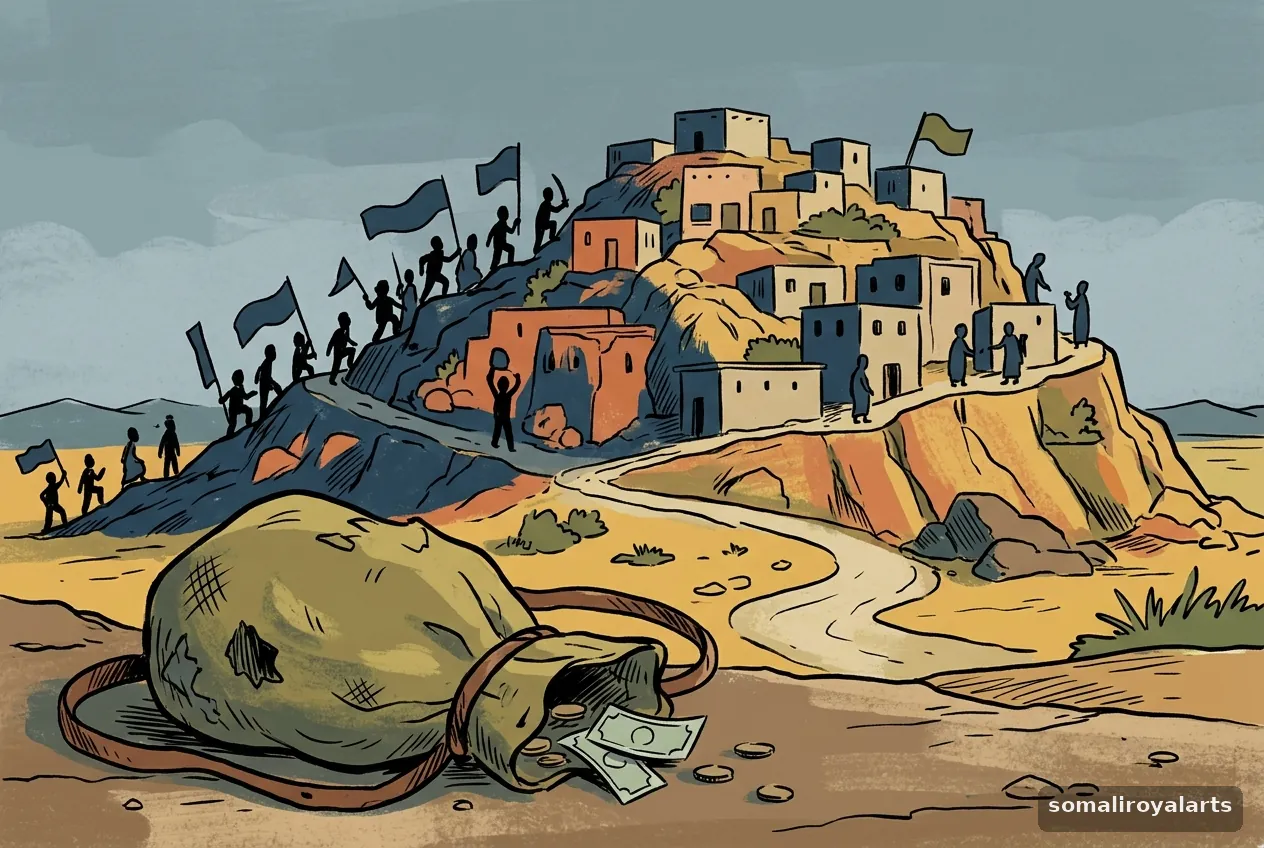
Ethiopian forces serving under the African Union mission have formally transferred their base in Buurhakaba to the Somali National Army. Ethiopian and Somali officers and a civilian official signed the handover documents, leaving a Somali army unit responsible for the town. Ethiopian troops had held Buurhakaba since 2014, and the local administration, transport sector, and markets had adapted to the presence of a foreign garrison. Buurhakaba lies on the road linking Mogadishu and Baidoa, a corridor that supplies the mission’s western sector and the seat of the Southwest administration. Al-Shabaab remains active in the scrubland along the route, so the removal of the Ethiopian garrison changes the security calculation for convoys passing through the area. The transfer took place in August even though the mission’s mandate runs until the end of December. Washington told the African Union on 1 July that it would stop funding the United Nations Support Office in Somalia when the mandate expires, removing roughly a quarter of the office’s budget. The office has since issued a tender seeking auctioneers for its vehicles, generators, and field hospitals. Troop reimbursements for the current cycle required $190 million but received commitments of $120 million. The approved logistics budget of $481 million has also not been fully financed. An extraordinary summit in Kampala on 31 July asked the UN Security Council for another 18 to 24 months of support, but no replacement has been found for the missing funds. Forward positions such as Buurhakaba require regular supplies of fuel, food, ammunition, armoured transport, and casualty evacuation. Contingent commanders are beginning to thin costly forward positions because they do not expect logistics support to continue after December. Three more handovers are scheduled, although their locations have not been made public. The transfer recalls the ATMIS drawdown of 2023 and 2024. Moqokori, Mahas, and smaller positions in Hiiraan and Galgaduud returned to al-Shabaab control within weeks or months of being handed to Somali forces. The losses were attributed to shortages of ammunition, fuel, and pay. At the start of this month, a brigade lost Teedaan after serving commanders said it had faced ammunition shortages for weeks. After a transfer, al-Shabaab’s pattern is to wait, study resupply schedules, and attack a convoy or base when the new occupants are most isolated. Forces that might reinforce Buurhakaba are also dispersed on political assignments in the federal member states, while troops recruited by the federal government in Puntland this year were absorbed into Puntland’s forces. Mogadishu is meanwhile expanding military relationships outside the African Union. The army commander travelled to Ankara on the day of the handover, and Turkiye extended its deployment mandate by two years in July. Somalia has also signed defence agreements with Pakistan and joined a Saudi-led maritime coalition. These arrangements offer training, aircraft, and diplomatic support, but they do not provide the recurring logistics required by a network of forward bases. The Buurhakaba transfer makes security on the Mogadishu-Baidoa corridor more dependent on the Somali army’s ability to supply its troops, reinforce the position, and protect convoys while the African Union mission’s funding remains unresolved.
Read our sourcing and corrections policy



Be the first to comment on this story!