Why The Verge's Wearables Expert Tracks Their Daily Life
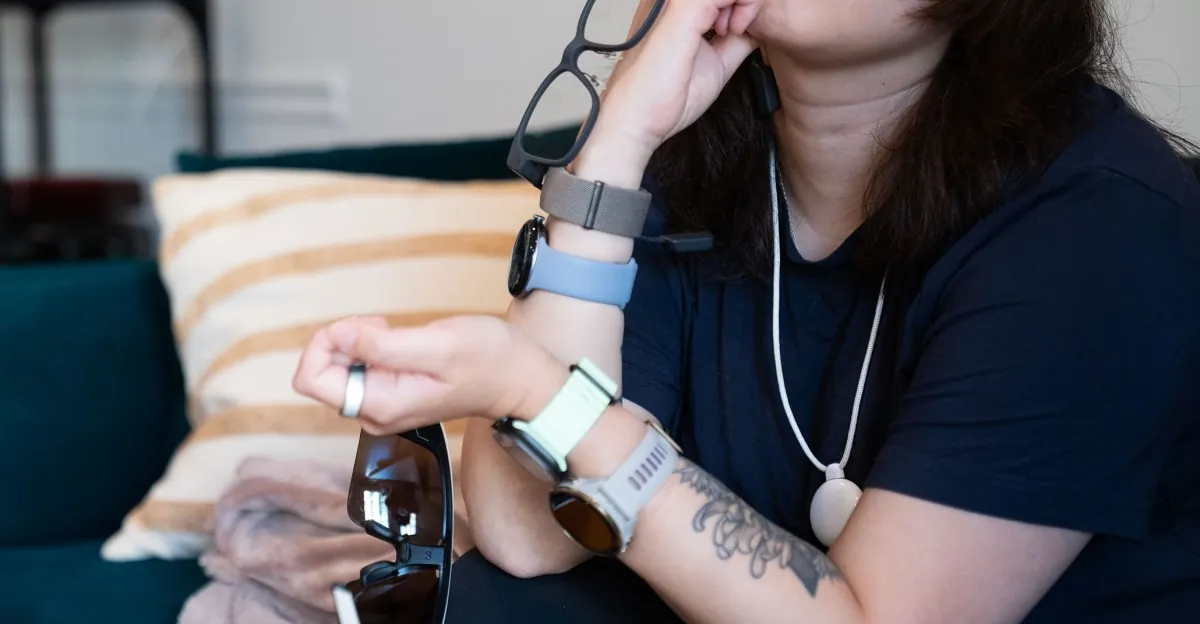
Social media is flooded with influencers sharing their routines, leading audiences to believe that copying these habits yields health success. As a senior wearables reviewer, the author frequently receives requests from readers wanting to see exactly what health metrics they track in a day. However, the reviewer warns that their daily regimen is designed purely for evaluating tech products, making it an extreme process normal people should not replicate. Their tracking involves scrutinizing details like GPS accuracy, how workouts drain battery life, and whether metabolic insights derived from a $600 smart scale actually correlate with a continuous glucose monitor. The volume of tracking equipment the reviewer wears fluctuates heavily depending on the time of year. During the winter and early spring months, the workload is generally lighter as the tech industry's product launch season concludes. However, from late summer through the fall, the reviewer is covered in various health sensors. Right now, their tracking schedule is particularly intense because they have been medically cleared to restart physical training just as a new launch season begins. They are also constructing a "digital twin" of their metabolism using Twin Health, a system that integrates continuous glucose monitors, blood tests, and specialized sensors. To maintain testing accuracy, the reviewer organizes their evaluations into product blocks, currently focusing on metabolic technology and screenless fitness trackers. Establishing baseline control devices is a fundamental part of this comparative process. The current testing roster includes the Apple Watch Ultra 3 serving as the master baseline, the Dexcom G7 continuous glucose monitor for diabetics, a Medline blood pressure cuff, and the Twin Health scale. Because Garmin recently released its screenless Cirqa tracker, it is being tested directly against the Oura Ring and the Fitbit Air, alongside premium smart scales like the $600 Withings BodyScan 2. The daily routine begins immediately upon waking up, prioritizing data synchronization and battery evaluation across all worn devices. The reviewer checks the remaining battery life of each gadget, paying special attention to how the first 24 hours of usage compare to the initial charging time for new additions. Once everything is synced, they open each individual application—including Apple Health, the Oura app, Google Health, and Eight Sleep—to compare recorded sleep durations. This cross-referencing helps identify which trackers accurately detect nightly disturbances and allows the reviewer to vet AI-generated readiness scores for glaring errors. Before drinking any water, the reviewer opens the Dexcom G7 application to log their fasting glucose levels and search for unusual overnight patterns. They then conduct an intensive testing phase, stepping onto the Twin Health scale to feed data into their metabolic digital twin project. This is followed by weigh-ins on three separate Withings devices: the Body Smart, the BodyFit, and the BodyScan 2. Once a week, they record their blood pressure using a smart cuff that syncs with the Twin Health application. This baseline data and the previous day's step count are then recorded in an analog notebook. Breakfast marks the final step of the morning routine, which typically takes a full hour to complete. Building the digital metabolic twin requires precise meal logging to observe how foods influence glucose fluctuations, prompting a follow-up check on the Dexcom G7 two hours after eating. Afterward, the wearables are largely ignored as the author goes about their day, outside of interacting with specific alerts. After a year of continuous glucose monitoring, their approach to daily food logging has become less rigid, making room for occasional snacks without disrupting the core testing process. Workouts demand a significantly higher level of attention and manual data entry. Before beginning, the reviewer must open every active tracking application and start each session in a precise sequence to ensure the data aligns perfectly. During a run, they note the recorded distance, average pace, and specific heart rate at every half-mile interval across all screens, using a Polar H10 chest strap as a reliable control device. At the conclusion, the captured data is transferred into a massive reference spreadsheet, adding 30 minutes to the session. They then check their glucose levels and weigh themselves across all three smart scales again to evaluate how each brand calculates water loss. Navigating electronics markets in cities like Mogadishu or Hargeisa makes this extreme level of health tracking highly impractical. High-end devices like continuous glucose monitors and $600 Wi-Fi scales are rarely stocked by local retailers, and importing them requires steep shipping fees. Local buyers looking to monitor their daily fitness will find that a standard smartphone step counter or an affordable basic wristband provides enough everyday activity data without the high costs or intense battery management required by a professional reviewer’s setup.
Read our sourcing and corrections policy
This article was prepared by our automated editorial system, which summarized and translated the source above. No human editor reviewed this article individually before publication.

Be the first to comment on this story!