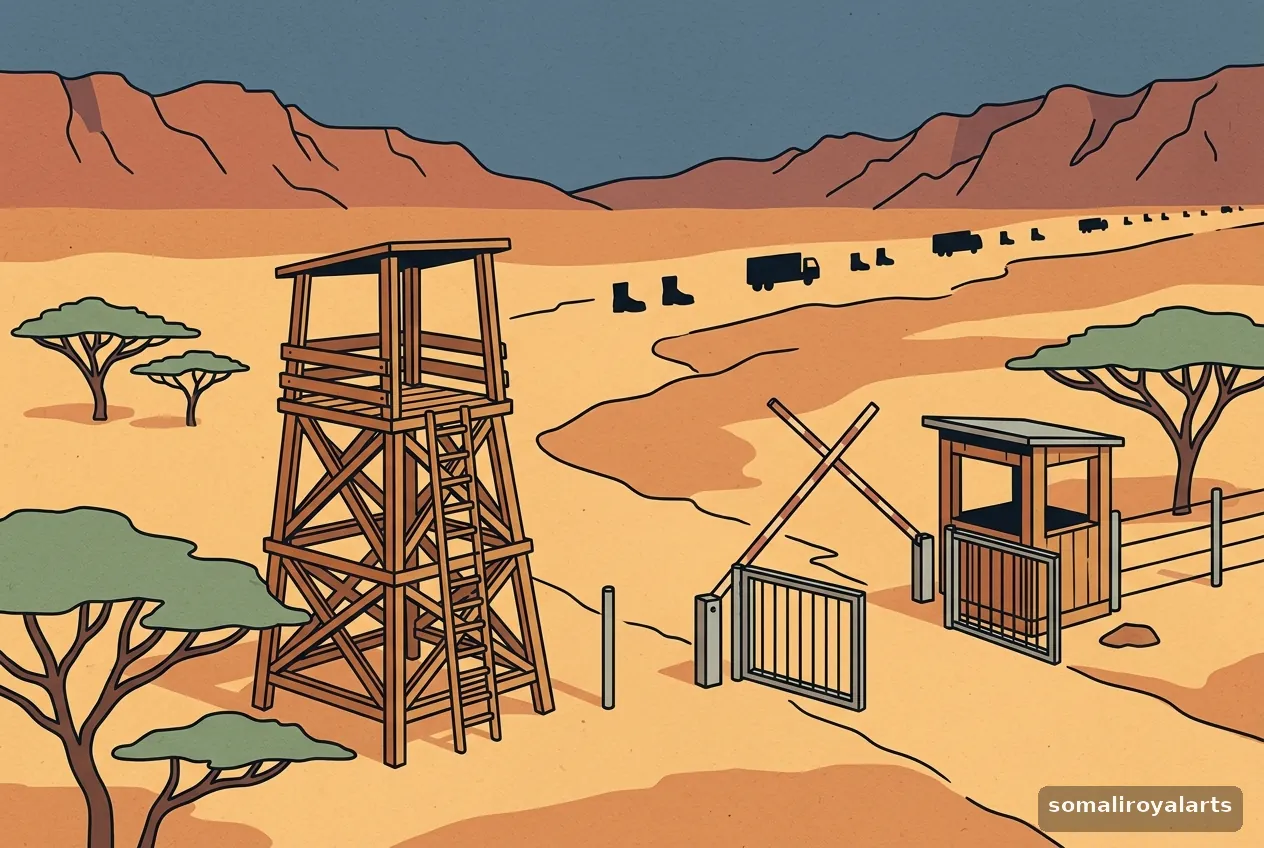
Why Ethiopia handed over its Burhakaba military base
After nearly 12 years of occupation, Ethiopia has handed over its military base in Burhakaba to Somali forces. Situated on the strategic highway linking Mogadishu with Baidoa—the administrative centre of South West State—the facility is surrounded by territory where Al-Shabaab maintains significant influence. While local reports suggest additional Ethiopian positions in the Bay region could soon be transferred, Addis Ababa has not announced a broader withdrawal. Ethiopian troops remain stationed across Bay and Bakool, and continue to support the wider African Union Support and Stabilisation Mission in Somalia (AUSSOM). The handover represents a convergence of shifting strategic calculations, financial uncertainty, and a planned security transition. At its core, the Burhakaba transfer aligns with the mandate of AUSSOM, which replaced the African Union Transition Mission in Somalia at the start of 2025. The new mission is tasked with gradually transferring security responsibilities to Somali national forces. AUSSOM has publicly framed the Burhakaba transition as a coordinated step in this process rather than a unilateral Ethiopian withdrawal, testing whether local troops are ready to hold critical infrastructure. However, this security transition is accelerating against a backdrop of severe financial pressure. The United States, which has contributed nearly $2 billion to the United Nations Support Office in Somalia (UNSOS) and its predecessor, has declared it will not oppose another AUSSOM mandate but will reject any extension that includes UN logistical or operational support. UNSOS currently provides the food, fuel, medical evacuation, and aviation transport that makes maintaining isolated outposts possible. This looming logistical vacuum directly threatens the nearly 12,000-strong AU mission. "The peacekeeping mission is in danger because ultimately you need to be able to support and sustain these forces," Somali lawmaker Ahmed Koshin recently told Reuters, reflecting widespread frustration over political divisions and the slow pace of the transition. Without the UN’s logistical backbone, sustaining remote forward operating bases becomes significantly more difficult for troop-contributing countries. For Ethiopia, this financial reality alters its military calculations. Addis Ababa views Al-Shabaab as a direct threat to its national security, noting the militant group’s history of cross-border incursions and threats of attacks inside Ethiopian territory. For years, Ethiopian forces stationed across Bay, Bakool, and Gedo have maintained a crucial buffer zone. Rather than a complete exit, the Burhakaba handover—located hundreds of kilometres from the Ethiopian border—suggests Addis Ababa is triaging its deployments, transferring deeper internal bases to Somali forces while preserving outposts that serve immediate border security interests. This strategic recalibration also unfolds within a complex and shifting regional environment. Relations between Mogadishu and Addis Ababa fractured severely in January 2024 after Ethiopia signed a memorandum of understanding with Somaliland. Somalia initially demanded the exclusion of Ethiopian troops from AUSSOM, citing sovereignty violations, before the Ankara Declaration—brokered by Turkey in December 2024—eased tensions and allowed Ethiopian forces to remain. The diplomatic situation has only grown more complicated since then. Egypt, locked in a longstanding rivalry with Ethiopia over the Nile River, has deepened its defence ties with Somalia and recently deployed troops as part of AUSSOM. While there is no direct evidence that Cairo’s arrival forced the Burhakaba handover, Addis Ababa must now navigate a crowded security theatre where its counter-terrorism campaign overlaps with federal, regional, and international disputes. The immediate question is whether the expanded Somali national army can successfully secure Burhakaba. While years of international training have swelled its ranks, the military continues to struggle with logistics, mobility, and sustaining units in hostile, isolated areas. Al-Shabaab frequently exploits the gaps left by departing foreign forces to attack supply routes and test newly deployed units. The success or failure of the newly deployed Somali units directly affects civilians and commercial drivers navigating the Baidoa-Mogadishu highway. If the national army struggles to secure the area without Ethiopian backing, Al-Shabaab could exploit the vacuum to sever supply lines, driving up the cost of essential goods in South West State and compromising a major transport corridor.
Read our sourcing and corrections policy


Be the first to comment on this story!