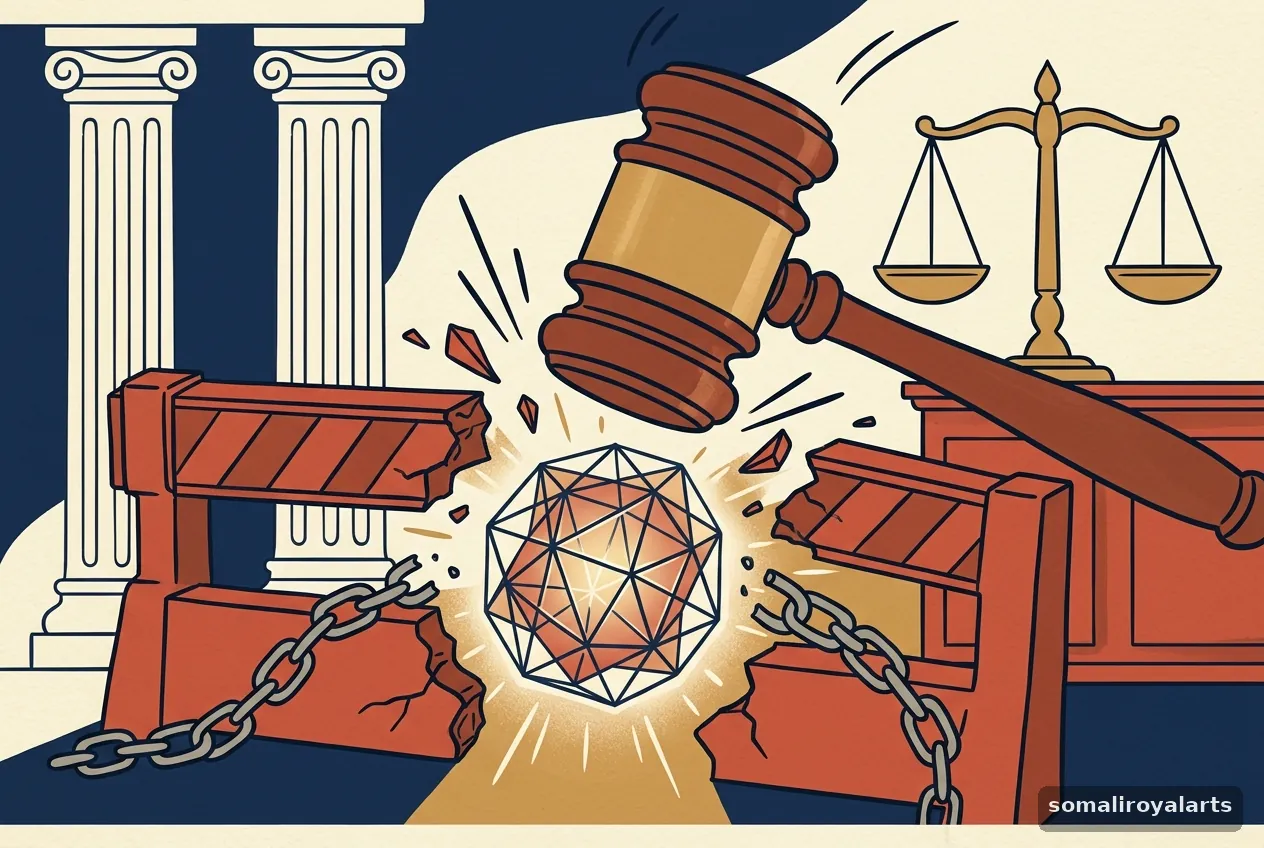
Court rules Trump administration illegally blacklisted Anthropic
A federal judge has struck down the Pentagon’s decision to blacklist artificial intelligence company Anthropic, ruling on Thursday that the Trump administration’s actions were unconstitutional and amounted to unlawful retaliation in violation of the First Amendment. Judge Rita F. Lin, a district judge in the Northern District of California, concluded that Defense Secretary Pete Hegseth acted unlawfully when he labelled the AI lab a “supply chain risk.” In her decision, Lin said that although the Department of War is free to choose its AI vendor, invoking national security is not a blank cheque to punish and retaliate against government critics. She described the broad measures imposed on Anthropic as arbitrary, capricious and baseless. The conflict began last winter when Hegseth tried to renegotiate all AI labs’ existing military contracts. The Pentagon sought new terms that would permit the use of artificial intelligence for “any lawful use,” a change that would significantly expand the Pentagon’s authority. While most AI labs agreed to the revised contracts, Anthropic refused to do so without specific limits. Anthropic insisted on maintaining two restrictions for its technology. The company said its AI could not be used for mass surveillance of American citizens or for lethal autonomous weapons—systems capable of killing targets without human oversight. This refusal initiated a high-stakes standoff between the company and the Department of Defense. The disagreement quickly escalated into mounting pressure on both sides. Department of Defense officials directed a series of insults at the company, culminating in a final ultimatum from the Trump administration. Less than 24 hours before that ultimatum, Anthropic CEO Dario Amodei publicly reaffirmed the company’s position. Amodei said Anthropic had never objected to particular military operations or tried to limit use of its technology on an ad hoc basis, but maintained that in a narrow set of cases AI could undermine democratic values rather than defend them. After Amodei’s statement, the government officially designated Anthropic a supply chain risk, a classification usually reserved for national-security threats. The Pentagon then signed deals with seven other AI labs, including Google, Microsoft, OpenAI and SpaceX. Anthropic responded by filing a lawsuit in March. Judge Lin then temporarily blocked the blacklist, noting that Department of War records showed the company had been designated a supply chain risk because of its “hostile manner through the press.” She described punishing Anthropic for drawing public scrutiny to the government’s contracting position as classic unlawful First Amendment retaliation. Following Thursday’s ruling, Anthropic spokesperson Danielle Ghiglieri welcomed the decision. She said the company remained focused on working productively with the government to use AI for national security so that all Americans could benefit from the technology. The California ruling concerns a US government-contracting dispute and does not determine the features or prices of AI tools used by developers and students in Somalia and East Africa. Its focus on limits around mass surveillance and lethal autonomous weapons makes it relevant to Somali readers following AI, because it sets out the tension between military use and the safety boundaries maintained by technology companies.
Read our sourcing and corrections policy
This article was prepared by our automated editorial system, which summarized and translated the source above. No human editor reviewed this article individually before publication.



Be the first to comment on this story!