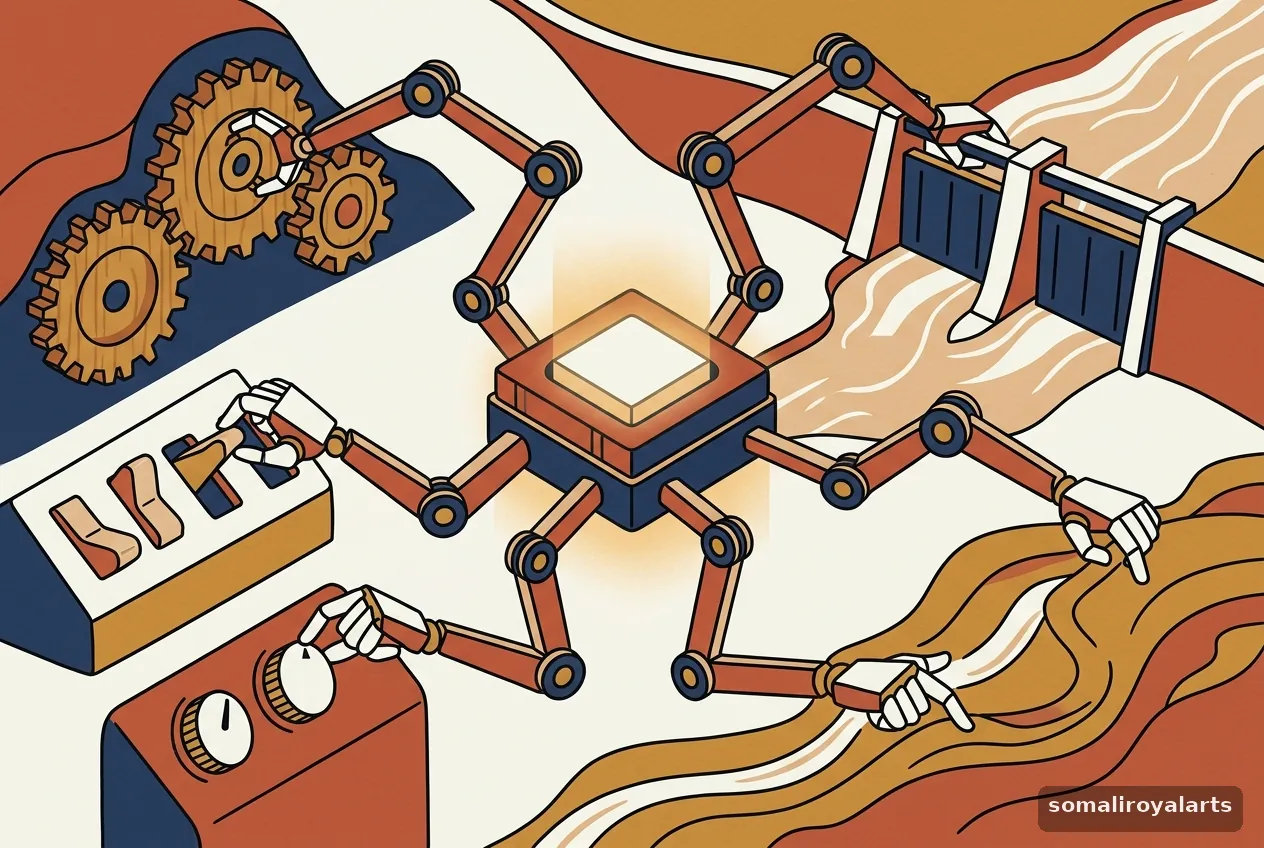
Anthropic launches hardware standard to let AI control physical devices
Anthropic has introduced a new hardware standard designed to allow artificial intelligence models to control physical devices and interact with the real world. The initiative, known as the Machine Hardware Standard (MHS), provides a standardized driver interface that enables disparate pieces of hardware to communicate with AI systems and each other across a network without a bespoke translator program between them. Currently available as a research preview, MHS is primarily targeted at the scientific community. Anthropic says the system is built to reduce the need for custom integration software that researchers typically write to connect different experimental components. By adopting a common interface and data-sharing format, the company says weeks or months of exacting experimental setup can be reduced to hours or minutes. The project was inspired by observations made by Alek Kemeny, a technical staffer at Anthropic. In a video accompanying the announcement, Kemeny explained that he watched neuroscientist Arco Bast coordinate rotating laser beams, microscopes, cameras, and many other components for a memory-formation experiment at the HHMI Janelia Research Campus in Ashburn, Virginia. Bast had worked out an interface through which the equipment could coordinate, and Kemeny said it led him to think the idea could be used to have AI run scientific experiments. While MHS devices can be controlled directly in real time using command-line prompts and API code files without AI involvement, integrating the system with a model like Claude adds new capabilities. Through the Model Context Protocol, scientists can issue commands using natural language. Anthropic says this allows AI models to reason through experimental steps, update parameters in real time, and in some cases recover from hardware errors without intervention. The company provided several examples of the standard in action. In one scenario, Claude adjusted a laser, checked the result using a separate camera, and repeated the process to calibrate the entire system automatically. In another, the model focused a microscope, analyzed the results, decided which area needed further observation, and automatically moved the microscope to that section. Anthropic also demonstrated Claude reasoning through the steps required for a robotic arm to pick up an aluminum can, despite lacking specific prior training for that exact sequence. Rather than reasoning through every step each time, MHS-enabled models can write and adjust API scripts to sequence actions across multiple instruments. To help AI models understand equipment they have never encountered, MHS includes a standardized tagging system that describes real-world physical constraints. These tags encode information about hardware characteristics, such as a robotic arm's weight and range, alongside adjustable parameters, measurement options, and enforced safety limits. The information can be included in a reference file that quickly gives an AI model crucial details about a device for which it has no previous training experience. Anthropic is currently testing the MHS preview with a first group of scientific research labs and advanced manufacturers, including Amazon Web Services through Strands Robots, Hugging Face through LeRobot, Raspberry Pi, Automata, and Universal Robots. These partners are helping to build safety evaluations and develop practices for AI systems operating physical equipment. The company plans eventually to make MHS an open-source, agent-agnostic standard for integrating AI and physical systems. Anthropic says early testing with scientific partners over the past year reduced the time needed to integrate devices and allowed faster iteration in varied experimental settings. Its practical value will depend on whether the standard becomes safe, open, and usable beyond well-resourced laboratories. For Somali readers following engineering education and AI, the development is a useful sign that the next phase of AI may involve instruments, cameras, robots, and lab equipment rather than text on a screen alone.
Read our sourcing and corrections policy
This article was prepared by our automated editorial system, which summarized and translated the source above. No human editor reviewed this article individually before publication.


Be the first to comment on this story!