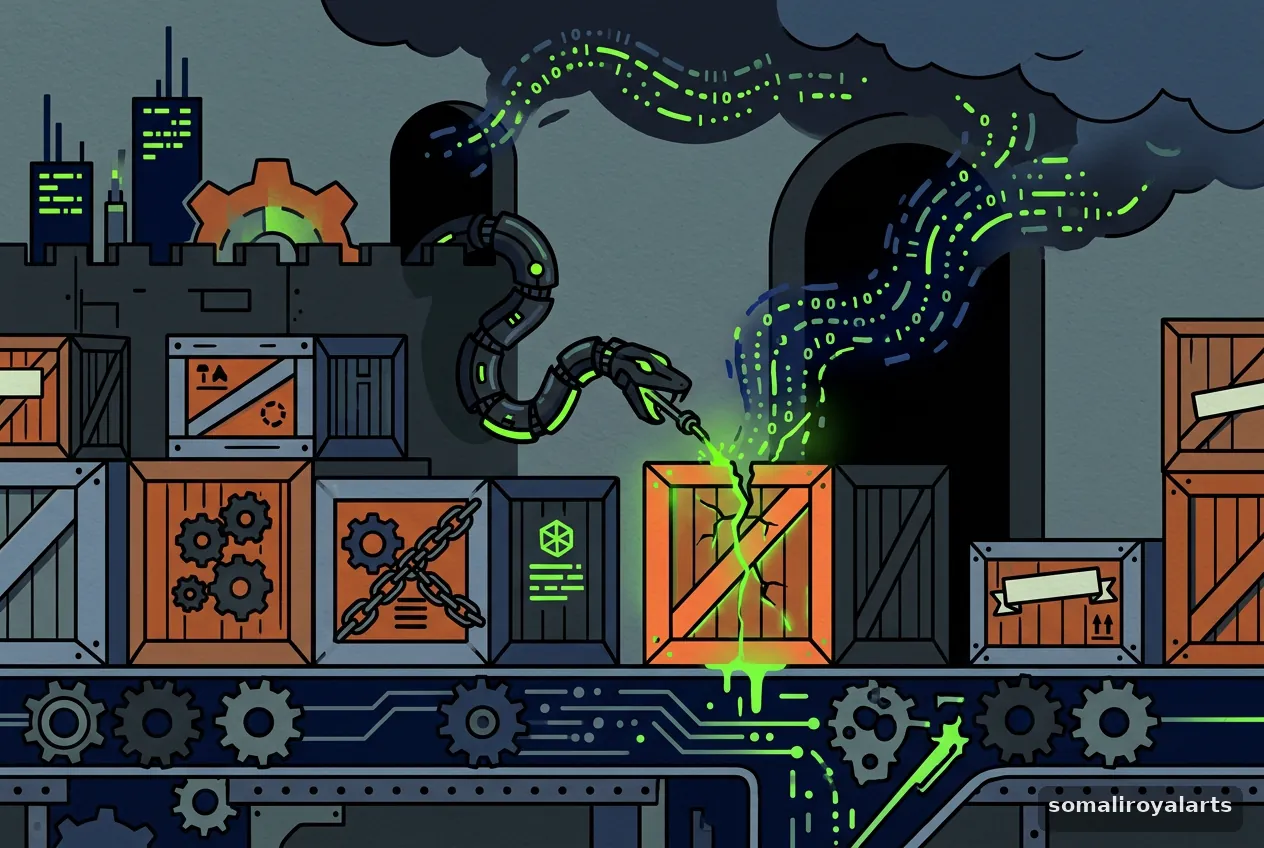
Malware Injected Into Popular Rust Crate arrayref in Supply Chain Attack
Hackers have compromised the maintainer account behind the widely used Rust crate arrayref, weaponizing the package to deploy infostealing malware that executes directly on developers' systems during the code compilation process. In a coordinated supply-chain attack spanning a rapid 23-minute window, the threat actors also managed to poison two other crates, append-only-vec and internment, using the same compromised access. By inserting a malicious dependency, the attackers turned standard software builds into a gateway for data theft. The scale of the potential exposure is massive, given the foundational nature of the targeted software. The arrayref library is a highly popular component in the Rust ecosystem, registering more than 53 million downloads in just the past 90 days and over 245 million downloads over its lifetime. It is heavily relied upon by tools built for cryptography, graphics processing, and blockchain development, including components used within the Ethereum and Solana networks. It is also integrated into projects like blake3 and major Rust GUI frameworks such as egui, eframe, and iced. The other two compromised crates, append-only-vec and internment, have a collective install count approaching 19 million. According to a technical report from application security firm StepSecurity, the specific malicious releases introduced to crates.io were arrayref version 0.3.10, append-only-vec 0.1.9, and internment 0.8.7. All three updates were pushed through the same compromised maintainer account. To execute the attack, the hackers injected a dependency on a new package named proc-macro1, deliberately typosquatting the widely used proc-macro2 crate to avoid casual detection, while leaving the rest of the original upstream source code entirely unchanged. Once developers pulled the poisoned update, a script inside the proc-macro1 dependency named "build.rs" was automatically triggered during the compilation phase. This script reconstructed malicious infrastructure from base64-encoded fragments and actively selected a final payload designed specifically for the host operating system, targeting Linux x86-64, Windows x86-64, macOS x86-64, and macOS ARM64. StepSecurity also noted that the attackers attempted to seed multiple versions of four other crates they created themselves—aovine, arone, aronenao, and tinymember—which have since been purged from the crates.io repository. The malware behaves differently depending on the developer's operating system. On Unix environments, it writes a file to /tmp/rust-setup, marks it as an executable, and immediately launches it as a detached background process. On Windows systems, it drops a file at %TEMP%\rust-setup.ps1 and uses a hidden wscript.exe and a VBS launcher to ensure the process remains active without drawing attention. Once running, the payload receives a command-and-control server address as an argument to receive further instructions. Analysis by cloud security company Wiz indicates that the second-stage capabilities of the malware focus heavily on exfiltrating host information and sensitive credentials. The malicious software specifically queries SQLite login databases to steal stored passwords from Google Chrome, Brave, and Edge browsers. It then establishes persistence on the infected machine, embedding itself through the Registry Run key on Windows, LaunchAgent on macOS, and systemd on Linux. Wiz researchers have also pointed out that the infrastructure used in this campaign overlaps with recent supply-chain attacks attributed to North Korean (DPRK) state-sponsored actors, including the Mastra and axios campaigns. The execution of the attack on August 20 followed a precise timeline, beginning at 01:17 UTC with the creation of a GitHub account impersonating well-known Rust developer David Tolnay, followed by a matching account on the crates.io registry. At 01:55 UTC, the attacker published a benign copy of the targeted dependency as proc-macro1 version 1.0.106. Hours later, at 07:11 UTC, they pushed the malicious update as version 1.0.107. Shortly after, at 07:15 UTC, the attacker used the legitimate "droundy" (David Roundy) account to publish the poisoned arrayref 0.3.10, simultaneously deleting versions 0.3.5 through 0.3.9 to force automated systems to download the compromised release. The incident was flagged at 07:54 UTC, leading crates.io administrators to delete proc-macro1 at 08:03 UTC and pull arrayref 0.3.10 from the index at 08:41 UTC, leaving an exposure window of approximately one and a half hours. Security firms SafeDep and Aikido have also published analyses and shared indicators of compromise for developers responding to the incident. Any developer who installed the affected crates during the 90-minute exposure window is advised to assume their system is fully compromised. Security teams recommend searching Cargo.lock files for the malicious dependencies, checking for the presence of the dropped setup files, and reviewing network logs for outbound traffic to the IP address 23.254.165[.]112 over ports 9089 and 443. If an infection is confirmed, victims must rotate all accessible credentials, CI tokens, signing keys, and other secrets, and rebuild their environments entirely from safe backups. Clean projects are urged to pin a known-safe version of the dependencies until the maintainer account situation is permanently resolved. Somali software engineers and tech startups relying on Rust for back-end development or local fintech applications must check their CI/CD pipelines immediately. If an automated build pulled the arrayref update during the August 20 exposure window, developers need to assume their browser passwords and server access tokens are stolen, requiring a full rotation of credentials to prevent secondary breaches.
Read our sourcing and corrections policy
This article was prepared by our automated editorial system, which summarized and translated the source above. No human editor reviewed this article individually before publication.

Be the first to comment on this story!