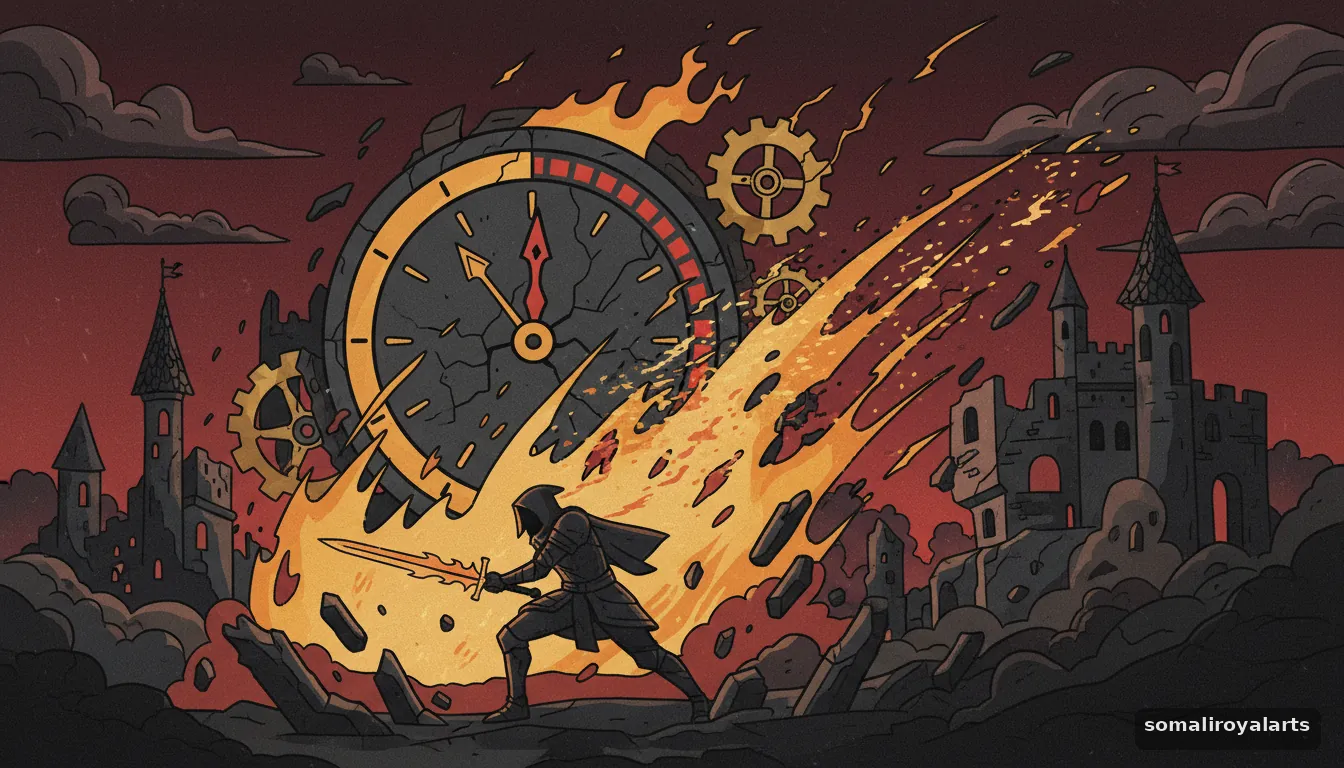
Hell Clock Explores 19th-Century Brazilian History Under A Strict Timer
Hell Clock is a new action role-playing game that combines relentless combat with a strict time limit. The title challenges players to fight through a dark historical setting while racing against an unforgiving countdown. The narrative abandons traditional fantasy and instead follows actual 19th-century Brazilian history. The story focuses on Canudos, a real-world religious settlement that faced violent destruction by the forces of the nascent First Brazilian Republic. Players control Pajeu, a warrior on a desperate mission. His primary goal is to save the soul of his mentor, a personal quest that drives him into the center of the wider historical conflict. The journey forces players to make significant moral choices. As Pajeu fights his way forward, players must decide whether to lead him on a campaign of righteous destruction or to seek a more thoughtful, measured justice. The core timing mechanic means players cannot make these decisions at their leisure. Every single second counts, forcing players to finalize their moral path and execute combat strategies rapidly before the timer expires. Players manage the time limit by using an extensive progression system. The game features a large number of upgrades and allows players to craft specific character builds, providing significant mechanical depth. The historical setting also provides an educational element. By bringing the events of Canudos to life, the game introduces players to a major South American conflict that international media rarely covers. The game's cost presents the main obstacle for buyers. The publisher set a notably hefty price tag, which may give potential players pause despite the compelling combat mechanics and historical depth. The steep purchase price will put this title out of reach for many players in Somalia and the diaspora, where buyers facing high initial software costs typically wait for major digital sales before committing their money.
Read our sourcing and corrections policy
This article was prepared by our automated editorial system, which summarized and translated the source above. No human editor reviewed this article individually before publication.



Be the first to comment on this story!