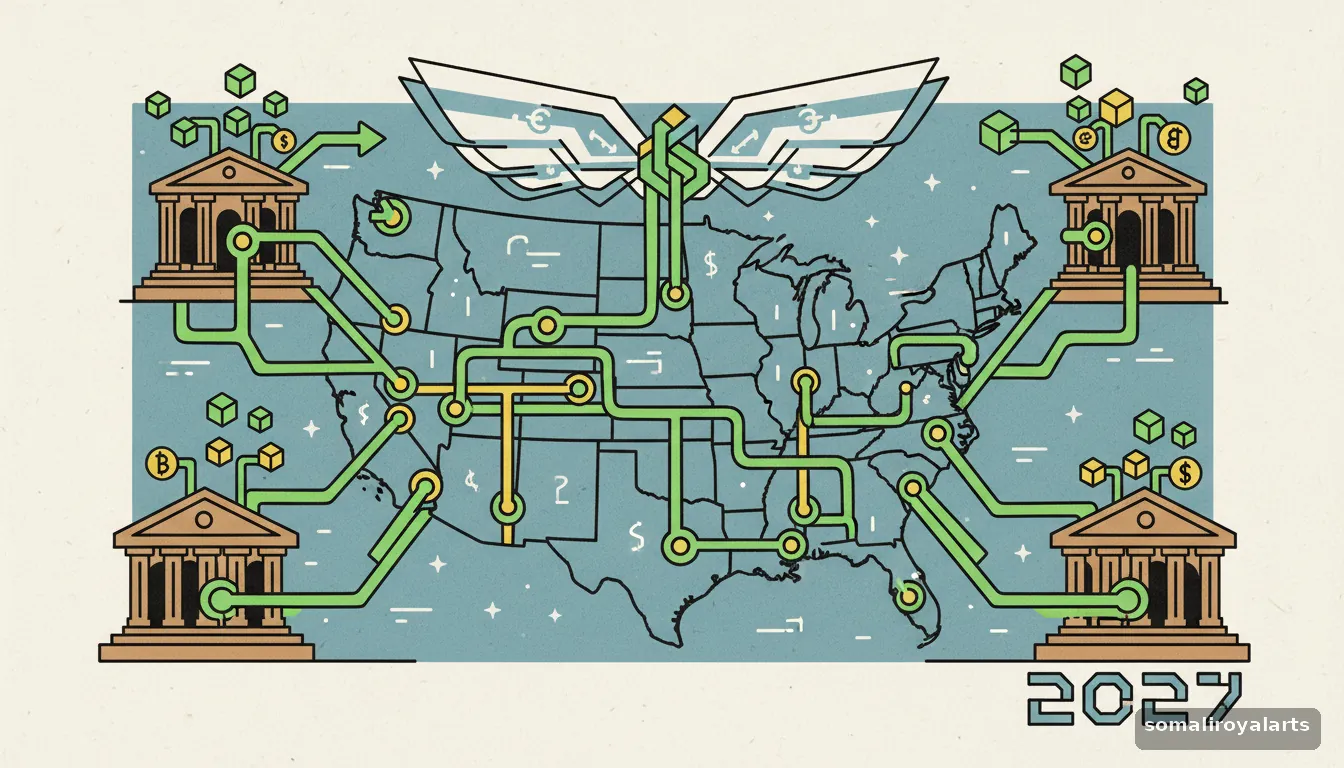
US banking associations target 2027 for shared blockchain network launch
Thirty-nine state banking associations across the United States have formed the BankChain Alliance to develop a nationwide, industry-owned blockchain network. The coalition announced on Tuesday that it is targeting a 2027 launch for shared infrastructure intended to handle onchain payments and tokenized deposits within the regulated banking system. The planned network intends to support smart payment tools, tokenized deposits, stablecoins and automated settlement for participating financial institutions. BankChain said it is selecting a technology partner to help build the system, adding that the network is intended to be interoperable with other blockchains. While the 39 participating state associations collectively represent thousands of financial institutions across the country, the announcement did not name any individual banks that have committed to the project. BankChain said it plans to invite banks nationwide to take ownership stakes in the network, but the alliance has not disclosed its funding structure or governance model. The organization did not respond to requests for further information before publication. The BankChain initiative joins several bank-led blockchain networks that have been announced or advanced since late 2025. Those efforts include major, regional and community lenders building shared infrastructure to move deposits and payments onchain while remaining within the regulated banking system. In June, The Clearing House announced an onchain money initiative backed by JPMorgan Chase, Bank of America, Citi, BNY and Wells Fargo. The proposed system would clear and settle tokenized deposits between banks while connecting blockchain activity with its existing payment systems. Unlike independently issued stablecoins, bank-led tokenized deposits represent claims on individual financial institutions and retain their treatment as commercial bank money. That structure can allow banks to offer programmable, round-the-clock transfers while keeping customer funds on their balance sheets. Regional lenders are pursuing a separate network through Cari, developed with Huntington, First Horizon, M&T Bank, KeyBank and Old National. Cari launched a minimum viable product in March and had attracted more than 30 participating banks by July. Separately, community banks formed the DTX Consortium through the Independent Bankers Association of Texas. The association said in June that membership had exceeded 50 banks as the group prepared a tokenized-deposit pilot. The consortium model is also appearing in the stablecoin sector. In June, Open Standard named more than 140 payments, banking, technology and crypto companies in connection with Open USD, a dollar-backed stablecoin expected to launch later in 2026. The project plans to offer businesses fee-free minting and redemption while distributing reserve earnings to participating companies. Round-the-clock settlement and tokenized deposits are worth watching for Soomaaliya and its diaspora because they concern how dollar-denominated money moves between banks. These US networks remain largely domestic proposals and projects, but changes to dollar banking systems can matter to people who depend on international remittance channels.
Read our sourcing and corrections policy
This article was prepared by our automated editorial system, which summarized and translated the source above. No human editor reviewed this article individually before publication.


Be the first to comment on this story!