NASA cancels $30 million rescue mission for aging Swift observatory
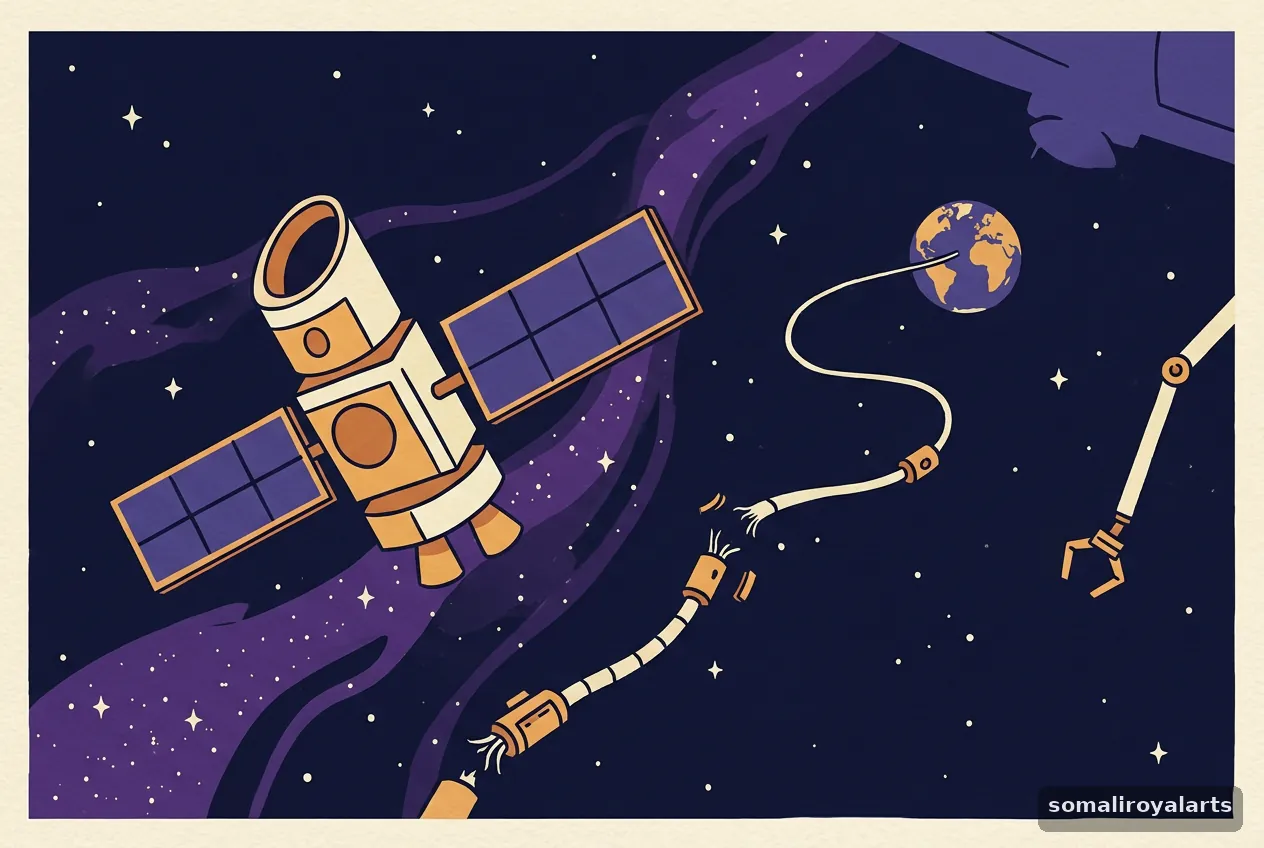
NASA has officially called off its $30 million rescue mission designed to save the Neil Gehrels Swift Observatory, meaning the nearly 22-year-old spacecraft will fall back to Earth and burn up in the atmosphere later this year. The private space startup Katalyst, contracted by the agency to intercept and boost the satellite, confirmed on Wednesday that ongoing attitude control problems with its rescue craft will prevent a successful capture. The rescue effort centered on an experimental satellite named Link, which launched on July 3. Built roughly to the size of a refrigerator, Link was outfitted with two power-generating solar arrays, three robotic arms, and three xenon-fueled electric thrusters. Its primary goal was to match orbits with Swift, grab the $500 million observatory, and push it into a higher altitude to prevent an imminent atmospheric reentry. The mission faced a tight deadline from the start. NASA awarded Katalyst the $30 million contract less than a year ago, stipulating that the rescue craft had to launch by this summer. The aggressive timeline was dictated by Swift's decaying orbit; without onboard thrusters of its own, the observatory had no way to maintain its altitude against atmospheric drag, making a robotic intervention the only viable path to keep it operational. Trouble struck in late July when the Link spacecraft suddenly spun out of control while traveling at nearly five miles per second. While Katalyst has not disclosed the cause of the issue, the company reported that two of Link’s three reaction wheels ceased functioning. Furthermore, the spacecraft experienced issues with its cold gas thrusters, which were intended to provide fine pointing control during proximity operations. These hardware failures left Link relying entirely on three low-impulse plasma thrusters as its sole method of managing its orientation. Faced with these technical issues, Katalyst concluded that attempting to grab the Swift observatory with the robotic arms was no longer possible, forcing NASA to abandon the primary objective. The startup plans to use the remaining thruster capacity to test Link's close-in navigation systems by flying near Swift without making contact. The impending loss of Swift represents a major blow to the astronomy community. The observatory far outlived its original two-year design lifespan, spending over two decades detecting gamma-ray bursts—the most powerful explosions in the known universe. Astronomers heavily relied on Swift's unique combination of multi-wavelength instruments and agile pointing system, which allowed it to identify deep space events and transmit coordinates for follow-up observations by other observatories. NASA leadership defended the decision to fund the high-risk project despite the outcome, noting that the rapid development still produced technical value. NASA Administrator Jared Isaacman stated that the agency must be willing to take smart risks when the potential return is high, adding that the failure does not change why the mission was worth attempting. Shawn Domagal-Goldman, director of NASA’s astrophysics division, praised the team for reaching the launch pad in record time during a busy year for astrophysics launches. Katalyst CEO Ghonhee Lee echoed these sentiments, framing the mission as a necessary step for the emerging satellite servicing industry, which aims to eventually refuel, repair, and upgrade hardware in space. Lee emphasized that the company took on a high-risk challenge and learned a tremendous amount from the flight. Katalyst now intends to turn those lessons into a repeatable playbook to inform future rendezvous and proximity operations across the commercial space sector. Somali students and researchers relying on open astrophysical data will lose a key source of early-warning alerts for deep space events when Swift burns up. Because the observatory acted as an automated trigger for ground telescopes globally, emerging science departments in Somalia and across the region will now have to depend on slower satellites to track gamma-ray bursts.
Read our sourcing and corrections policy
This article was prepared by our automated editorial system, which summarized and translated the source above. No human editor reviewed this article individually before publication.



Be the first to comment on this story!