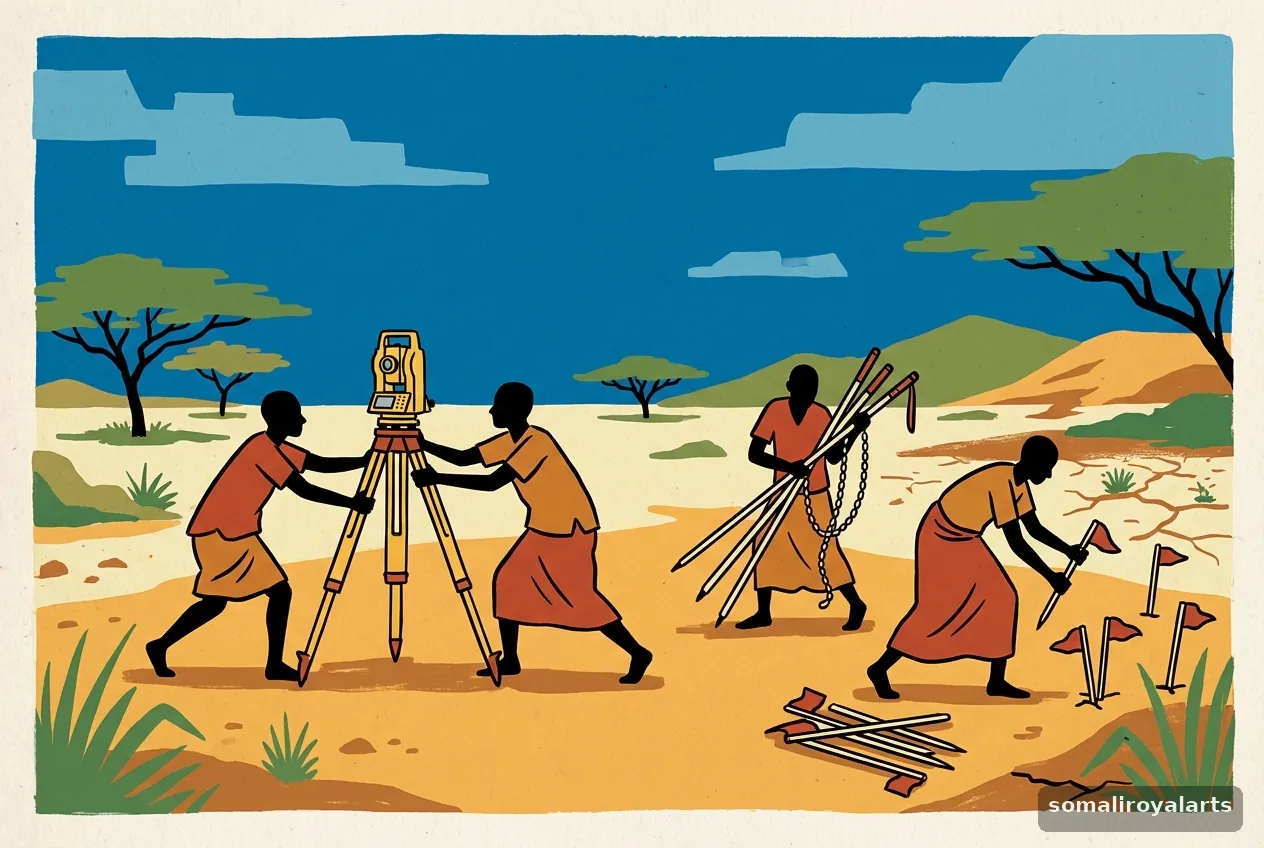
Biyomaal Militia Seizes Surveyors in Lower Shabelle Land Dispute
A Biyomaal militia operating in Somalia's Lower Shabelle region detained a land survey team in early July, confiscating their equipment in a major escalation over contested coastal territory. The captured group, which reportedly included foreign nationals, was publicly paraded on July 8 alongside generators, vehicles, and surveying instruments. Biyomaal elders state the team was mapping the Deexda area—a stretch of land between Marka, KM50, and the coastal settlements of Jasiira and Gendershe—in preparation for a land transfer the local community was never consulted about. The seizure triggered immediate public mobilization. On July 9, Biyomaal elders, women, and armed young men held a demonstration at KM50, located roughly fifty kilometres southwest of Mogadishu. Protesters carrying both copies of the Quran and Kalashnikov rifles accused rival Habar Gidir and Abgaal militias of attempting to annex their ancestral farmland. Community leaders warned that if religious appeals fail, they are prepared to defend the territory, which contains their ancestral graves and vital water wells, by force. The underlying tensions stem from explosive allegations made in December 2024 against Somalia's largest private institution. A statement issued on behalf of the Dir Biyomaal community accused Ahmed Nur Ali Jimale, the founder of the Hormuud telecommunications conglomerate, of financing a plot to acquire Biyomaal land. The statement alleged the scheme had the legislative backing of President Hassan Sheikh Mohamud and aimed to resettle over ten thousand families from a different clan family. While no evidence supporting the resettlement numbers has emerged, and neither Hormuud nor Villa Somalia has publicly responded, the unresolved accusations explain why the arrival of surveying equipment sparked such a volatile reaction. Violence had already erupted before the survey team was captured. Heavy fighting broke out between Biyomaal and Habar Gidir militias around Janaale on July 4, raging for three days. Banana plantations were set ablaze, and Habar Gidir elders reported three fatalities among their ranks following attacks on their farms. The clashes continued on July 6 along the crucial road connecting Janaale to the regional capital, Marka, with both sides deploying technicals armed with heavy machine guns. The fighting has severed access for local farmers and traders, effectively wiping out a planting season in a district that is a primary source of fresh produce for Mogadishu. The conflict saw a rapid counter-mobilisation on July 13. Habar Gidir and Abgaal elders convened near Jazeera, just outside Mogadishu, to accuse the Biyomaal of occupying historical lands belonging to their clans. In an escalation of rhetoric, these elders alleged the Biyomaal were receiving backing from Somaliland and Israel. While no evidence was provided to support these claims, the introduction of national security narratives into a dispute over irrigated farmland marks a dangerous shift in the conflict's tone, leaving little room for peaceful boundary arbitration. The dispute has already implicated the federal government's security apparatus. In April, an elder who had vocally opposed land seizures around Baqal and Xawaalow was shot dead at Fadmuuse, near KM50. Soldiers from the Turkish-trained Gorgor commando brigade were subsequently detained and questioned regarding the killing. The involvement of elite military units points to the severity of the crisis, pushing it far beyond the jurisdiction of local district commissioners. Land ownership in Lower Shabelle has been violently contested since the banana plantation economy was militarised in the early 1990s, with deeds often dictated by whoever controlled the territory at the time. Successive federal administrations have failed to establish a credible land registry, resulting in overlapping claims backed by contradictory documents and historical memories. The region also remains highly volatile, with the army holding garrisons at Awdhegle, Mubarak, and Qoryoley while al-Shabaab controls the roads between them. Currently, the federal government remains largely absent from the land crisis, its attention focused on regional political manoeuvring rather than managing a border dispute playing out just forty minutes from the capital. The closure of the Janaale road cuts Mogadishu off from one of its primary agricultural suppliers, meaning residents in the capital will likely face higher prices and lower availability for fresh fruit and vegetables in the coming weeks.
Read our sourcing and corrections policy
This article was prepared by our automated editorial system, which summarized and translated the source above. No human editor reviewed this article individually before publication.
Be the first to comment on this story!